Booking choice: The Grand Palace, Wat Pho and Wat Arun tour, ★ 4.8 (5,771). Check dates Compare the options below
Visitors often ask which of the two to choose, as if they were far apart. They are not. Wat Pho sits on the east bank, beside the Grand Palace. Wat Arun faces it from the west bank. Between them runs a ferry that crosses every 10 to 15 minutes. Seeing both takes a morning or an afternoon, and each makes the other easier to understand.
This guide explains what makes each temple different, the best order for the day with or without the Grand Palace, and the tours that combine them, from a three-hour walk to a private day with hotel pickup. How to reach the river is in the getting there guide.
The quick answer
Wat Pho and Wat Arun face each other across the river. From Wat Pho's gate, walk a few minutes to Tha Tien pier and take the cross-river ferry, which takes 3 to 5 minutes and costs a few-baht coin. Wat Pho is open 8 am to 7:30 pm and is famous for its 46-metre gilded Reclining Buddha and its massage school. Wat Arun is open 8 am to 6 pm, with last tickets at about 5:30 pm, and is famous for its porcelain prang, which you can climb to the lower terrace. Each temple sells its own ticket at its own gate, so bring cash. Allow about three hours for both. With the Grand Palace (8:30 am to 4:30 pm, tickets until 3:30 pm), start at the palace, then Wat Pho, then Wat Arun. For a late start, see Wat Pho in the late afternoon, cross to Wat Arun before its last tickets, and watch the sunset from the Tha Tien side. You can do all of it alone; a guide adds the stories, the order and help with the palace ticket queue.
Should I visit Wat Pho or Wat Arun?
Visit both. They face each other across the river, a ferry ride of a few minutes apart, and they are very different: Wat Pho is about the Reclining Buddha and a quiet maze of courtyards, Wat Arun about the porcelain prang and the river.
If you truly have time for only one, choose by what you want to see. Wat Pho suits you if you want the most famous Buddha image in Bangkok, a calm place to walk in the shade and perhaps a traditional Thai massage. Wat Arun suits you if you want the view, the detail of the porcelain close up and the climb. But the choice is rarely needed: together the two take about three hours, and the ferry between them is part of the fun. The table compares them topic by topic.
| Topic | Wat Pho | Wat Arun |
|---|---|---|
| Bank of the river | East, next to the Grand Palace | West, on the Thonburi side |
| Famous for | The 46-metre gilded Reclining Buddha | The central prang covered in porcelain and seashells |
| Also see | Tiled chedis, galleries of Buddha images, the massage school | Four satellite prangs, the ordination hall, the giant guardians |
| Climb | No | Yes, to the lower terrace, by very steep steps |
| Opening hours | 8 am to 7:30 pm | 8 am to 6 pm, last tickets at about 5:30 pm |
| Ticket | Its own fee at its gate | A small entry fee in cash at the ticket counter |
| Time needed | About an hour, more with a massage | 45 to 90 minutes |
| Best light | Late afternoon, when the courtyards are calm | Morning inside; sunset from the other bank |
What is the distance between Wat Pho and Wat Arun?
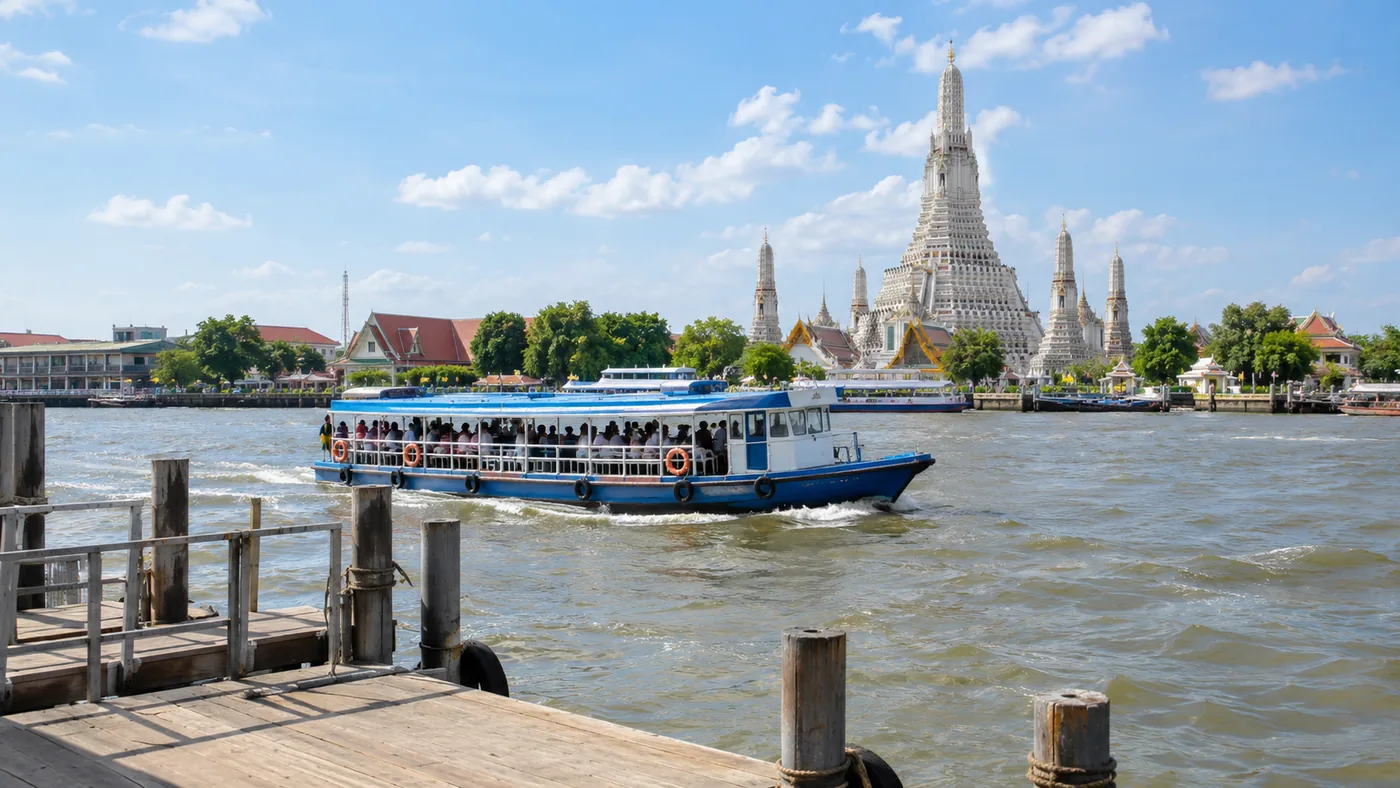
A few hundred metres, with the river in between. You walk a few minutes from Wat Pho to Tha Tien pier, then cross by ferry in 3 to 5 minutes. Door to door, it takes about 15 minutes including the wait for the boat.
Leave Wat Pho by the gate on Maha Rat Road, cross the road and walk down the small market lane to Tha Tien pier. The cross-river ferry leaves from its own part of the pier every 10 to 15 minutes. Pay the few-baht fare at the pier, and you land beside Wat Arun, a short walk from its ticket counter. There is no bridge close by, so the ferry is the only direct link, and it runs all day until the evening.
Coming back, take the ferry from the Wat Arun side to Tha Tien. All the routes to the river, from the MRT to the tourist boat, are in the getting there guide.
Both temples in three hours on foot with a guide, the ferry crossing and a fresh coconut in between, with a full refund if you cancel up to 24 hours ahead.
Check dates for the Wat Pho and Wat Arun walkWhat makes Wat Pho worth the visit?
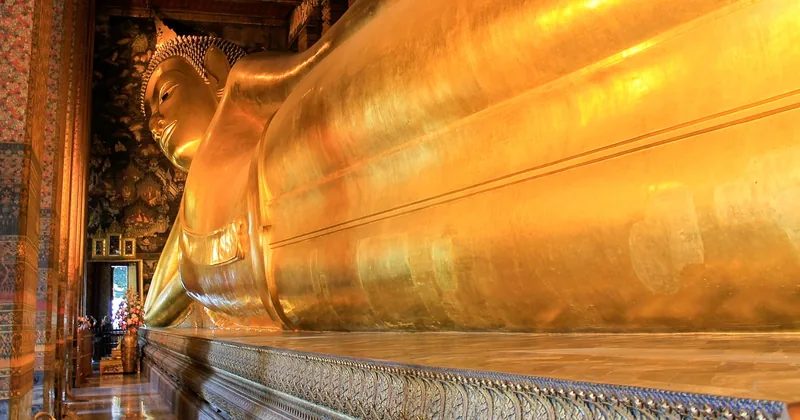
The Reclining Buddha, 46 metres long and covered in gold leaf, with mother-of-pearl inlay on the soles of its feet. Around it lies one of the largest temple compounds in Bangkok, with tiled chedis, long galleries of Buddha images and a famous school of traditional Thai massage.
Wat Pho is older than Bangkok as a capital, and it was rebuilt and enlarged by the early Chakri kings. Most visitors head straight to the hall of the Reclining Buddha, which fills the building from end to end: you walk along its length, then past a row of bronze bowls where people drop small coins for good luck. Shoes come off at the entrance to the hall.
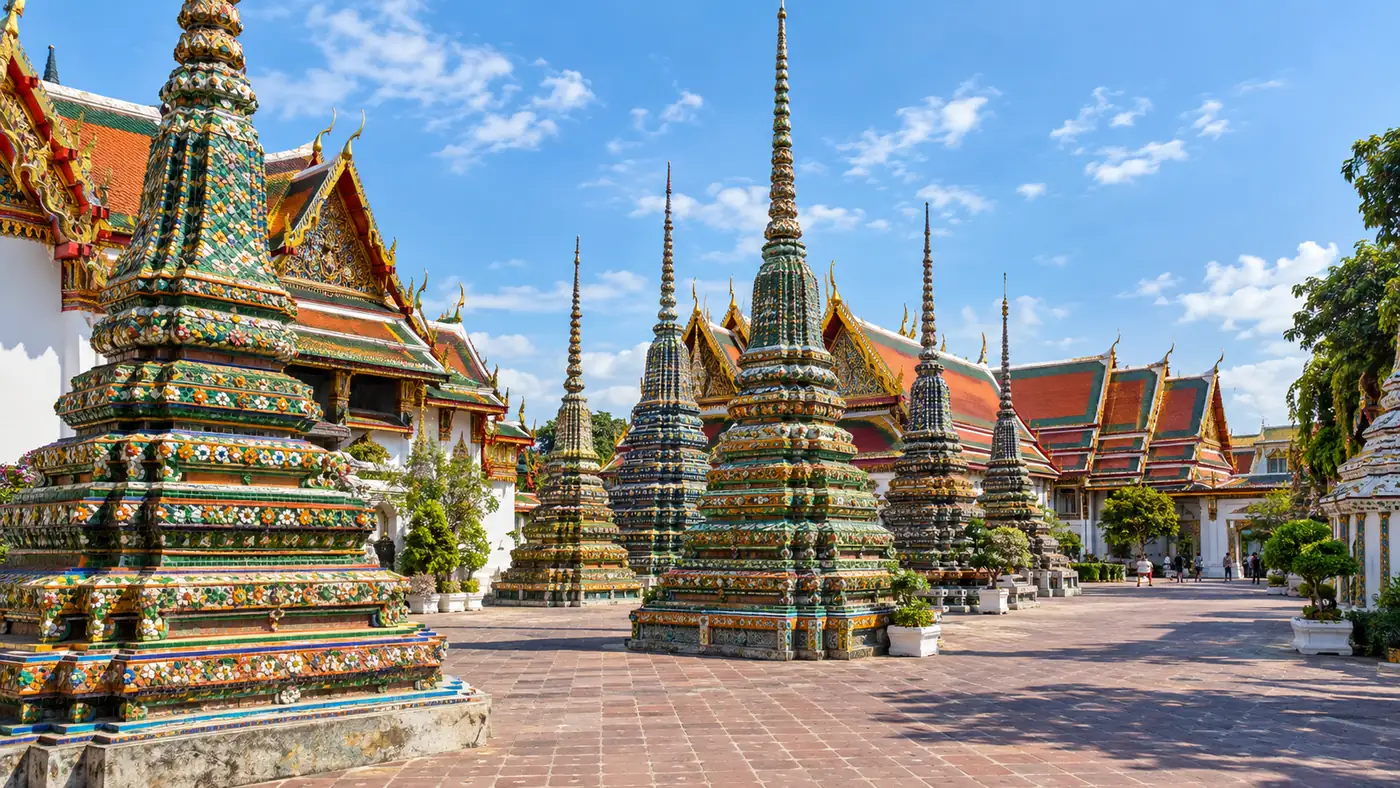
The rest of the compound is quieter and rewards a slow walk: the four great chedis covered in coloured tiles, cloisters lined with seated Buddha images, and small gardens with rock sculptures. The massage school on site offers traditional Thai massage to visitors, which is a good pause between the two temples. Wat Pho stays open until 7:30 pm, later than both Wat Arun and the Grand Palace, which makes it easy to fit into any order.
What makes Wat Arun different from Wat Pho?
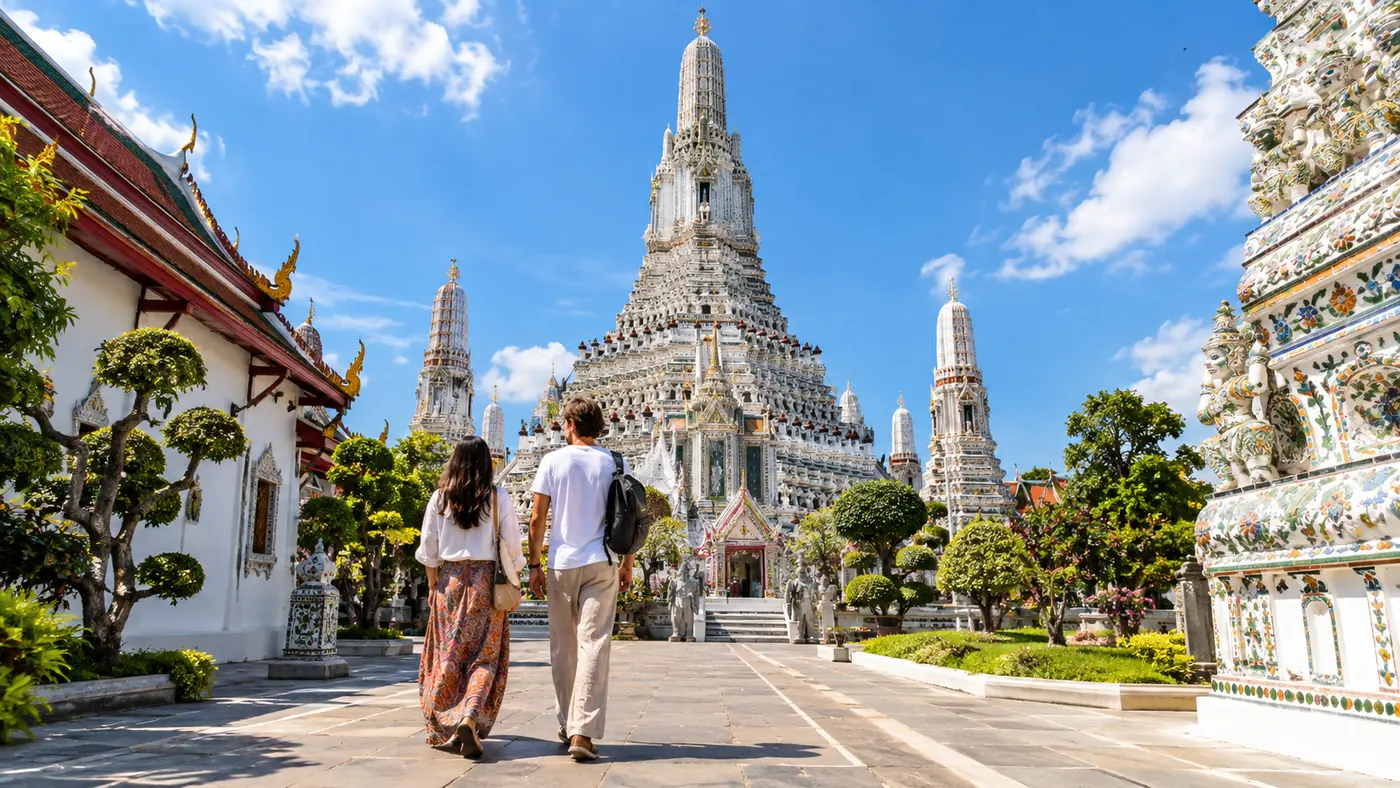
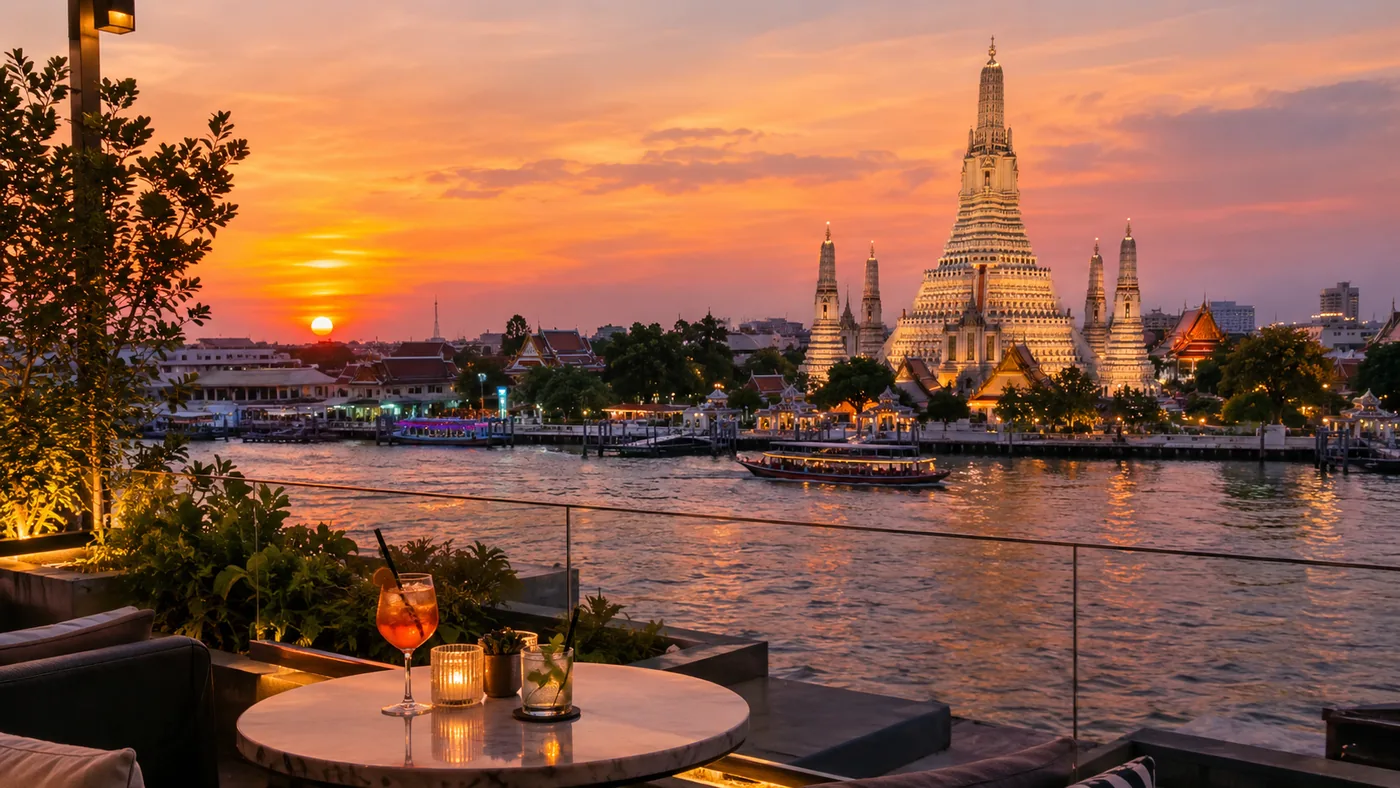
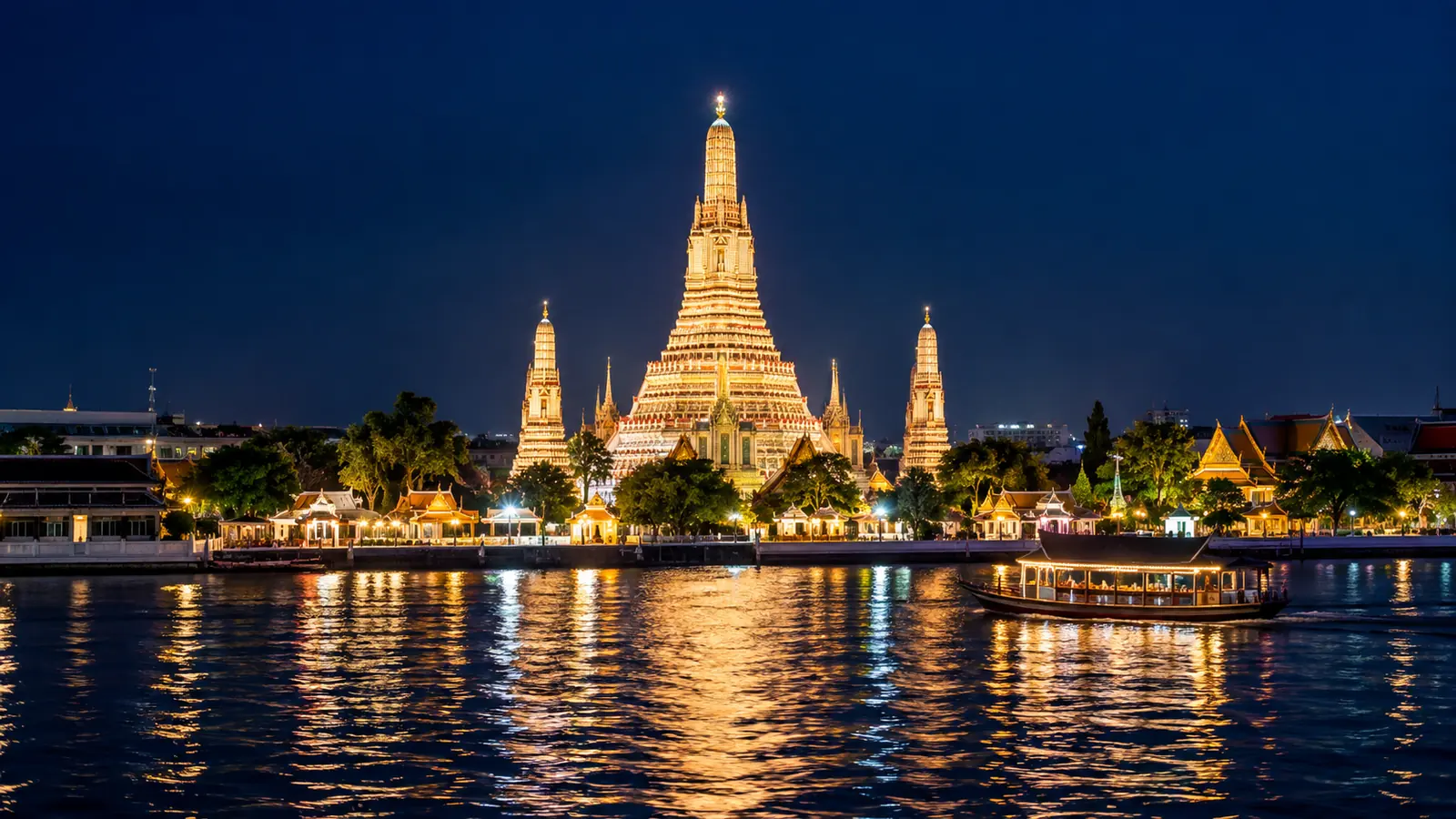
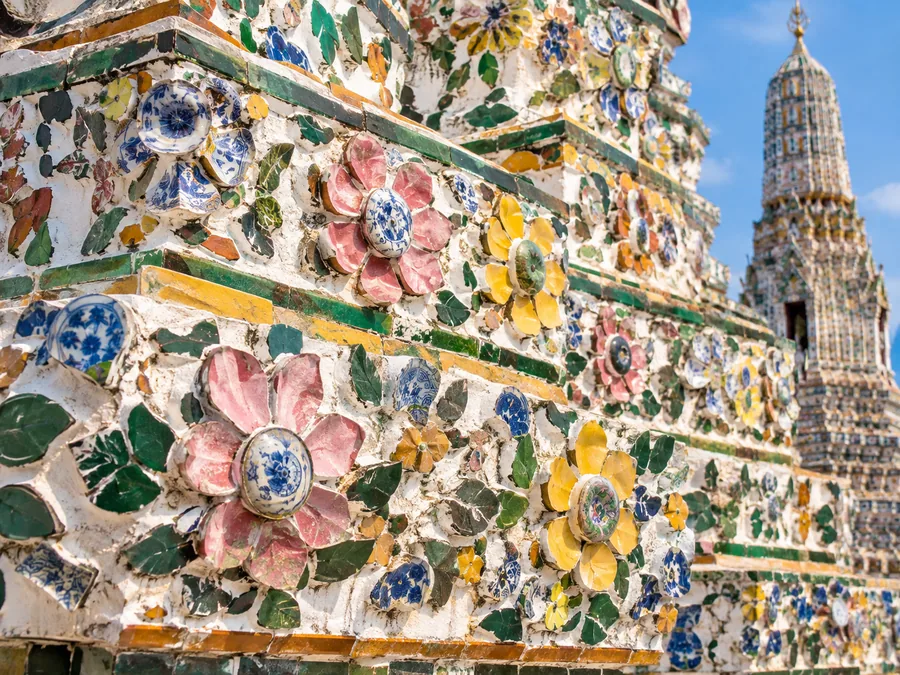
Wat Arun is built around one great tower, the prang, covered in pieces of Chinese porcelain and seashells, and it stands right on the river. You can climb its very steep steps to the lower terrace and look back across the water to Wat Pho and the Grand Palace.
The temple dates from the Ayutthaya period, when it was called Wat Makok. King Taksin made it the royal temple of his Thonburi capital around 1767 and named it Wat Chaeng. The Emerald Buddha was kept here from 1779 until 1784, when it moved across the river to Wat Phra Kaew, in the Grand Palace. Rama II began enlarging the prang, and Rama III completed it in about 1851. The porcelain arrived as ballast on ships from China and was broken into petals, flowers and patterns. The upper levels have been closed since the 2013 to 2017 restoration, so the climb stops at the lower terrace.
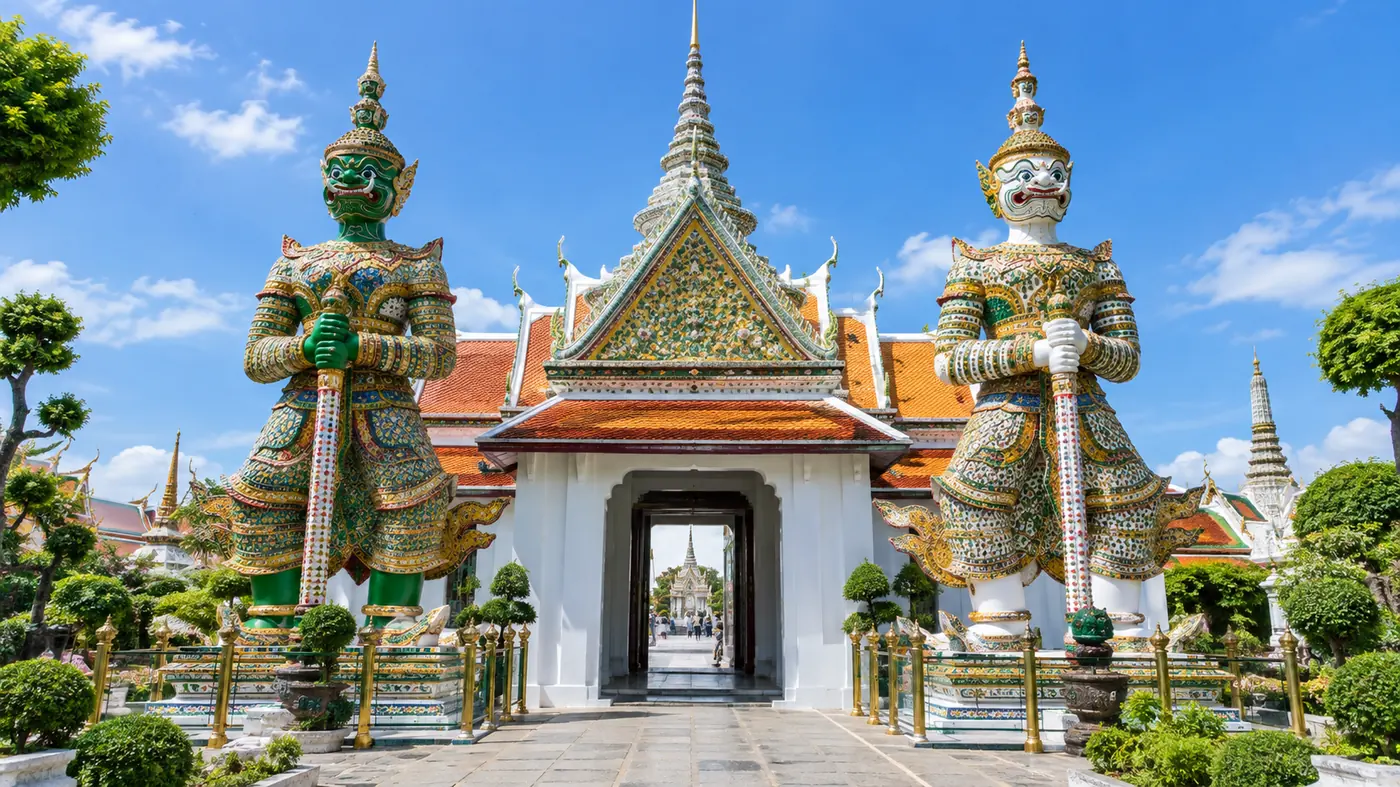
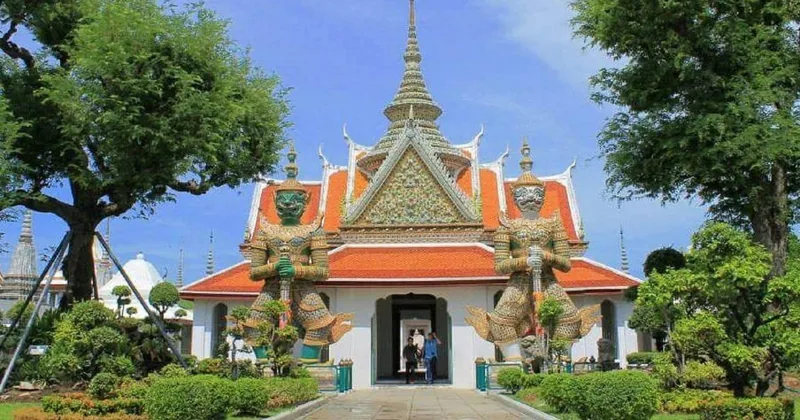
At the gate of the ordination hall (ubosot) stand two giant guardians from the Ramakien, and inside is the Buddha image that Rama II is said to have designed; his ashes are in its base. An hour is enough to see it all. The details are in the tickets and hours guide.
How do you see the Grand Palace, Wat Pho and Wat Arun in half a day?
Start at the Grand Palace, because it stops selling tickets at 3:30 pm, then walk about 10 minutes to Wat Pho, then take the ferry to Wat Arun. Allow five to six hours with a lunch break.
- 8:30 am: the Grand Palace opens. Go early, before the tour groups and the heat. Allow about two hours for the palace and the Temple of the Emerald Buddha. Tickets are sold at the gate and on the official website.
- About 11 am: walk south along the palace walls to Wat Pho. See the Reclining Buddha and the courtyards in about an hour.
- About noon: lunch near Tha Tien, or a Thai massage at Wat Pho.
- Early afternoon: walk to Tha Tien pier and take the ferry to Wat Arun. Allow about an hour, including the climb.
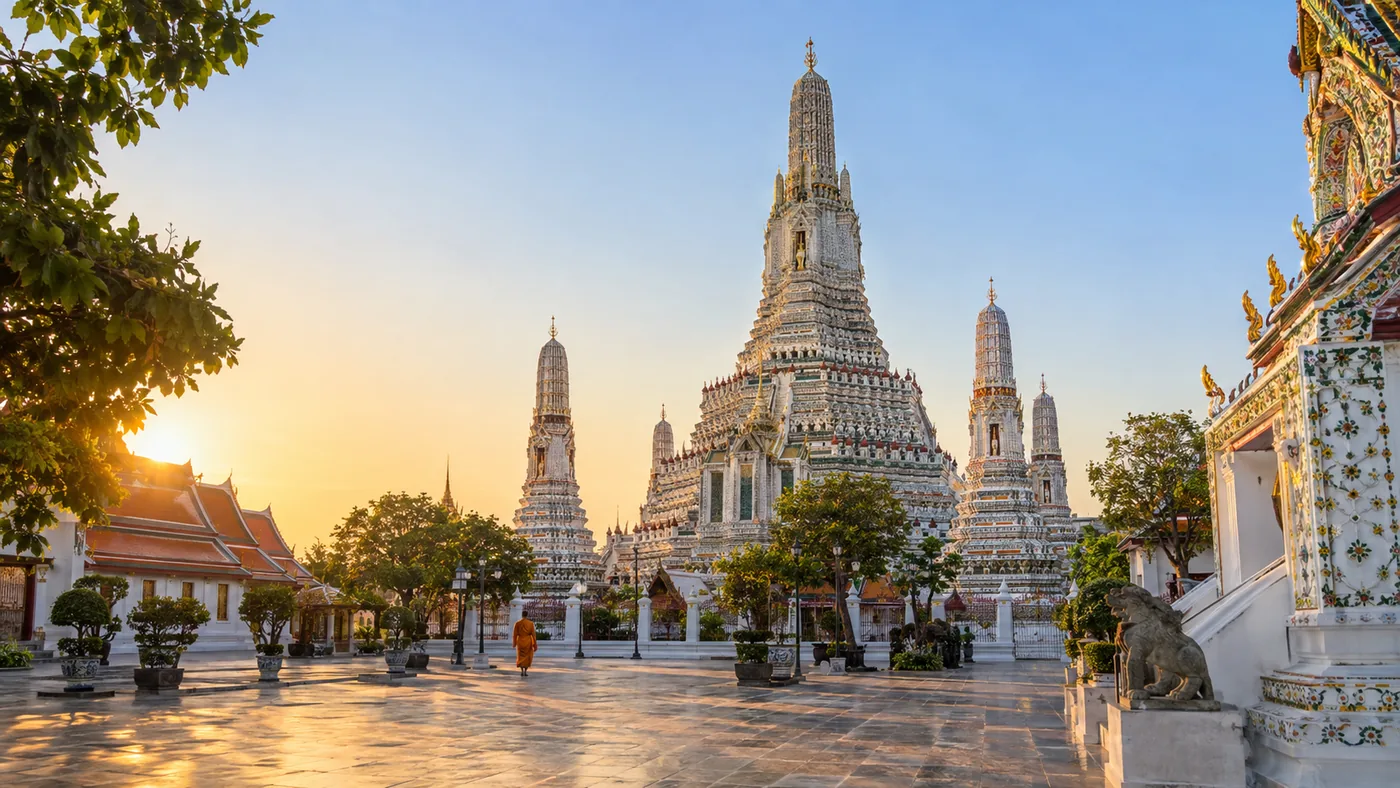
For a late start: skip the palace or see it another day. Visit Wat Pho in the late afternoon, when the courtyards are calm, then cross to Wat Arun before its last tickets at about 5:30 pm. Come back on the ferry and watch the sunset behind the prang from the Tha Tien side, where you only need to stand on the pier.
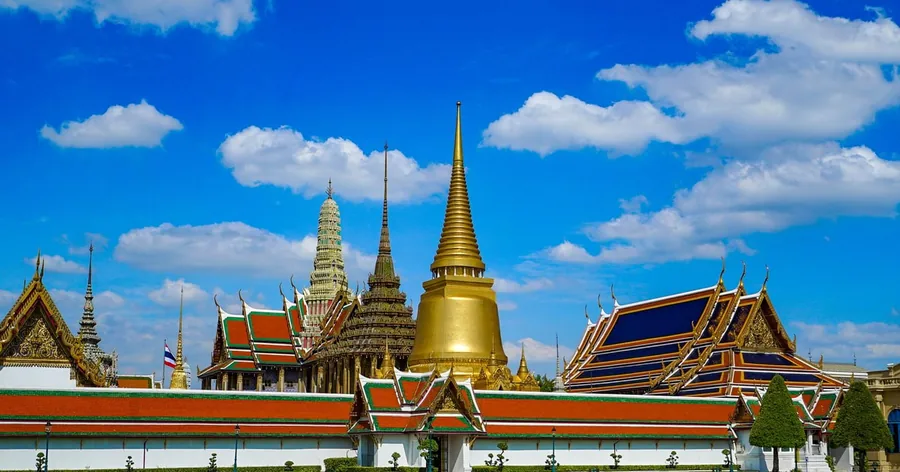
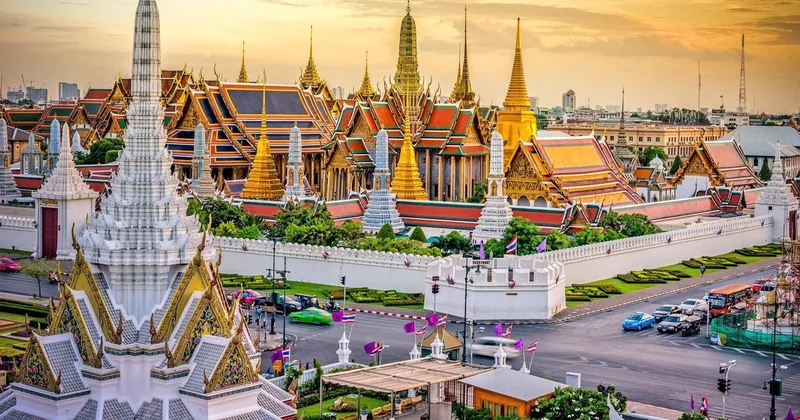
The classic half day with a guide who gets you past the Grand Palace ticket queue: the palace, Wat Pho's Reclining Buddha and the boat across to Wat Arun, in five hours from Tha Chang pier. The most reviewed tour here, rated 4.8 from 5,771 reviews. Entry fees are bought at the counters on the day.
Explore the Grand Palace, Wat Pho and Wat Arun tourWhich tours combine Wat Pho and Wat Arun?
Six tours on GetYourGuide cover both temples: three add the Grand Palace, one is a three-hour walk, one runs in the evening and one adds a quiet third temple. The table shows who each one suits.
Most leave the entry fees to be paid at each gate on the day. The exceptions are the evening tour, which includes the Wat Pho and Wat Arun tickets, the private tour, which includes the admission fees, and the private Wat Hong tour, which includes tickets. Check the includes box before you book. Every tour here gives a full refund if you cancel up to 24 hours ahead, and all the options are compared on the homepage.
| Tour | Temples | Length | Rating | Best for |
|---|---|---|---|---|
| Grand Palace, Wat Pho & Wat Arun Tour | Grand Palace, Wat Pho, Wat Arun | 5 hours | 4.8 (5,771) | First-timers who want the palace queue handled |
| Wat Pho & Wat Arun Walking Tour | Wat Pho, Wat Arun | 3 hours | 4.6 (1,803) | Skipping the palace, with time to roam |
| Half-Day Grand Palace, Wat Pho & Wat Arun | Grand Palace, Wat Pho, Wat Arun | 4 hours | 4.8 (430) | A walking tour with more depth |
| Private Grand Palace & Temples Tour | Grand Palace, Wat Pho, Wat Arun | 5 hours | 4.8 (898) | Hotel pickup, families, short stopovers |
| Evening Wat Arun, Wat Pho & Tuk Tuk | Wat Pho, Wat Arun, then Chinatown | 4 hours | 4.6 (721) | Cooler hours, sunset and dinner |
| Wat Pho, Wat Arun & Wat Hong Private Tour | Wat Pho, Wat Arun, Wat Hong Rattanaram | 4 hours | 4.9 (50) | A private, quieter morning |
The three great temples in four hours with a licensed guide and the river ferry both ways, for travellers who want the stories, not just photos.
Check dates for the half-day three-temple tourCan you visit Wat Pho and Wat Arun without a tour?
Yes, easily. Walk or take the MRT to Sanam Chai, pay at each temple's gate in cash, and take the ferry between them. A guide adds the stories, the order of the day and help at the Grand Palace ticket queue.
Both temples are simple to visit alone. The signs are clear, the ferry is easy, and neither needs a ticket booked in advance. Bring cash for the two entry fees and the ferry, dress for temples, and carry water. If a stranger outside tells you a temple is closed today, smile and walk on to the official gate.
What you miss alone is the meaning. The giants at Wat Arun, the scenes from the Ramakien and the stories of the kings are hard to read without help. Reviewers of the walking tour liked the balance of stories and time on their own to roam and take photos; some groups see Wat Arun first so they can stay at Wat Pho as long as they like. The private Wat Hong tour (4.9 from 50 reviews) adds Wat Hong Rattanaram, a quiet temple next to Wat Arun with Chinese and Western styles and a Sukhothai Buddha image, with hotel transfers and tickets included.
How do you plan a sunset visit to both temples?
Start at Wat Pho at about 4 pm, cross to Wat Arun before its last tickets at about 5:30 pm, then take the ferry back and watch the sunset from the Tha Tien side as the prang is lit.
The late afternoon is cooler and calmer than midday. Wat Pho stays open until 7:30 pm, so there is no rush there, but Wat Arun stops selling tickets at about 5:30 pm and closes at 6 pm. See Wat Arun first if you arrive late, then cross back to Wat Pho. After dark, the prang is lit, and the view from the riverbank on the Tha Tien side is the best of the day. Rooftop bars along the riverbank look straight at it for the price of a drink; the options are in the best views guide.
If you want this evening planned for you, the evening tour includes both temple tickets and the ferry both ways, then a tuk tuk to Chinatown for dinner. Reviewers mention Wat Pho just before closing and hardly any crowds. Clothes for all three sites, including the stricter Grand Palace, are in the dress guide.
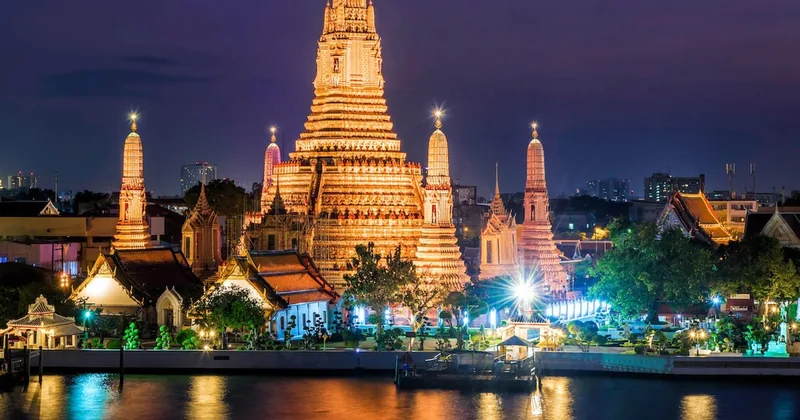
Wat Pho before closing, the ferry to Wat Arun as the sun goes down and the lights come on, then a tuk tuk to Chinatown. Both temple tickets and the ferry are included; four hours, rated 4.6 from 721 reviews.
Explore the evening temples and tuk tuk tourFrequently asked questions
How long do you need for Wat Pho and Wat Arun?
About three hours at a relaxed pace: an hour or so at Wat Pho, the ferry across, and 45 to 90 minutes at Wat Arun. Add about two hours for the Grand Palace.
Is there one ticket for Wat Pho and Wat Arun?
No. Each temple sells its own ticket at its own gate, and Wat Arun asks for cash. Some tours, like the evening tour and the private tours, include the tickets.
Which is better for a first visit, Wat Pho or Wat Arun?
Both, because they are a ferry ride apart. If you must choose, Wat Pho for the Reclining Buddha and shade, Wat Arun for the porcelain prang, the climb and the river.
Do the Grand Palace tours include Wat Arun's entry fee?
Usually not. The flagship tour and the half-day tour leave entry fees to be paid on the day; the private tour includes admission, with Wat Pho and Wat Arun as options.
Ready to book
Choose your tour
Check your date and the live price on GetYourGuide; the refund terms are shown on each option.
Grand Palace, Wat Pho & Wat Arun Tour
- The Grand Palace and the Temple of the Emerald Buddha
- Wat Pho and its Reclining Buddha
- The boat across the river to Wat Arun
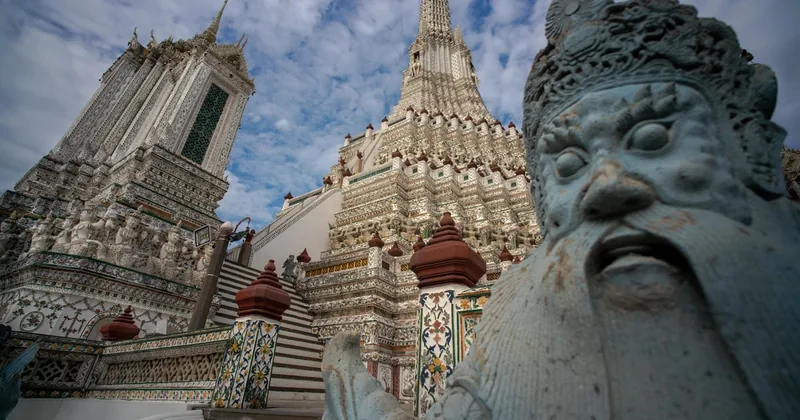
Wat Pho & Wat Arun Walking Tour
- Wat Pho and the Reclining Buddha with a guide
- The ferry across the Chao Phraya to Wat Arun
- Wat Arun's central prang and courtyard explained
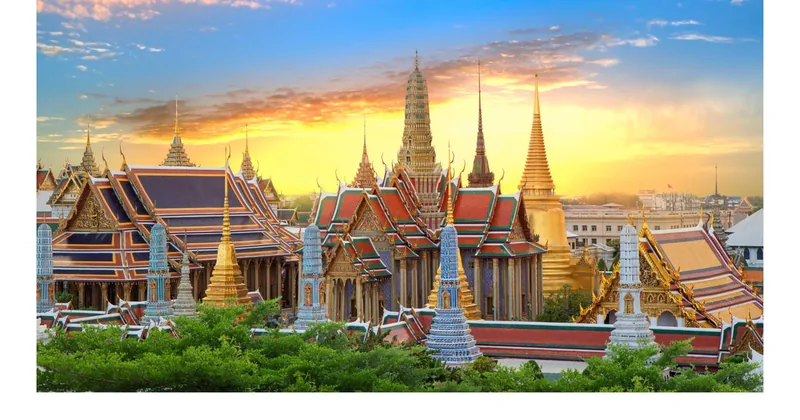
Half-Day Grand Palace, Wat Pho & Wat Arun
The three great temples in four hours with a licensed guide and the river ferry both ways