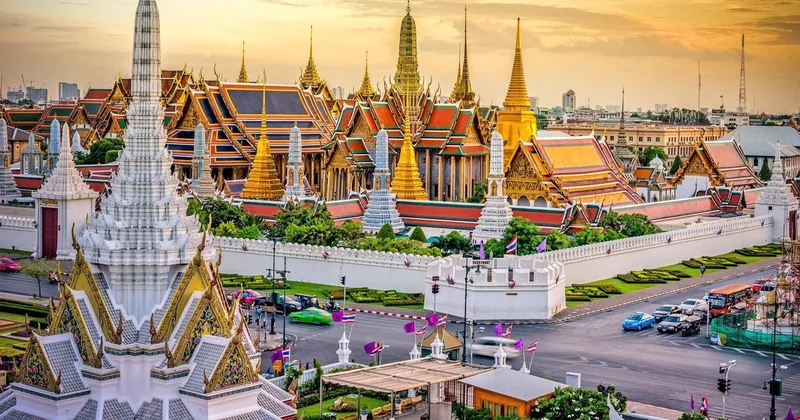
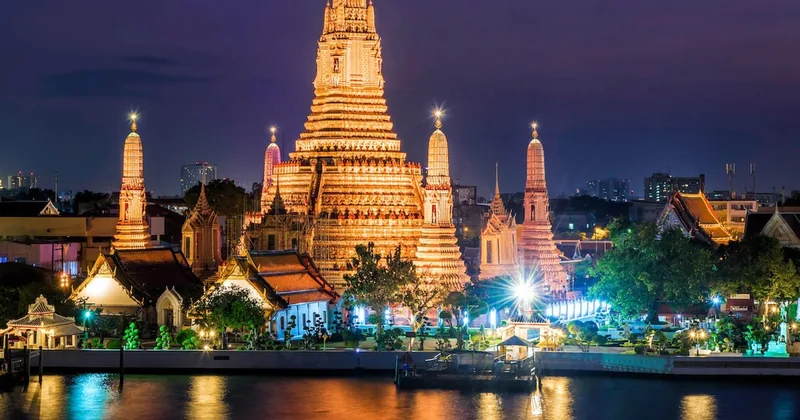
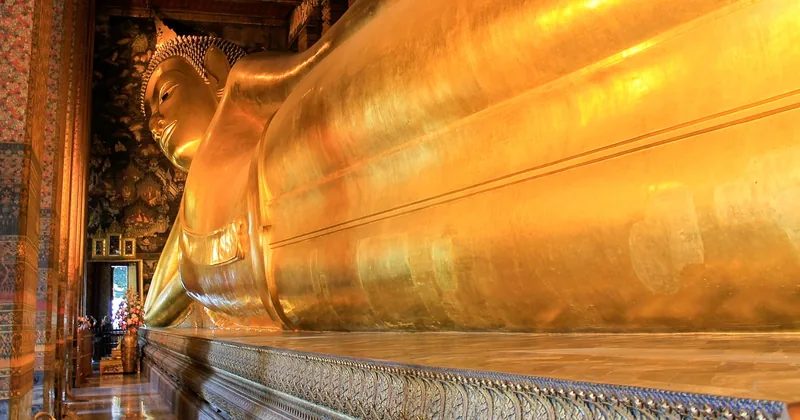
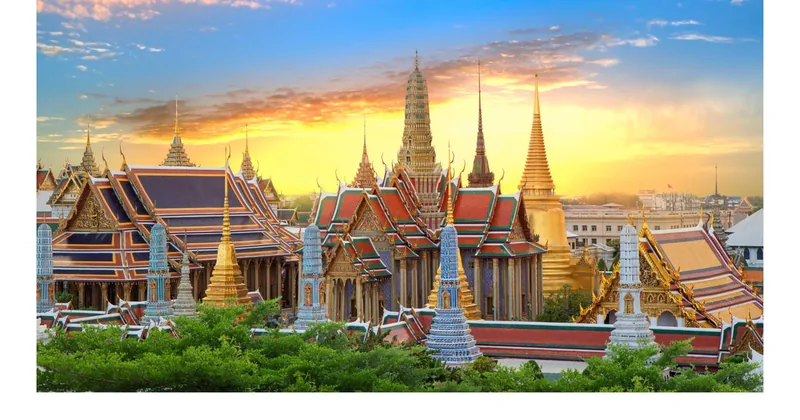
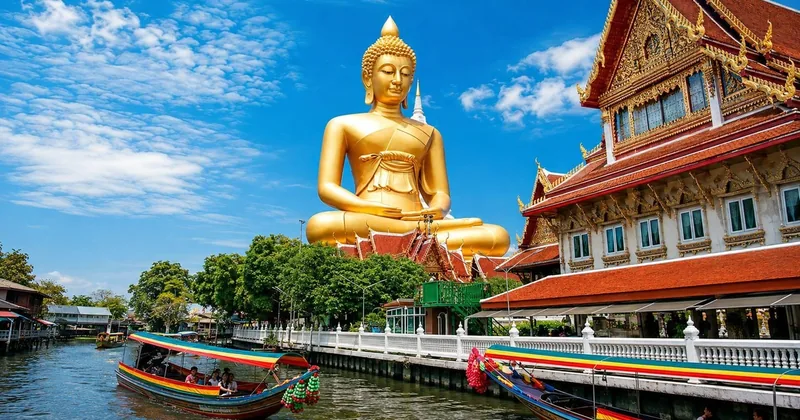
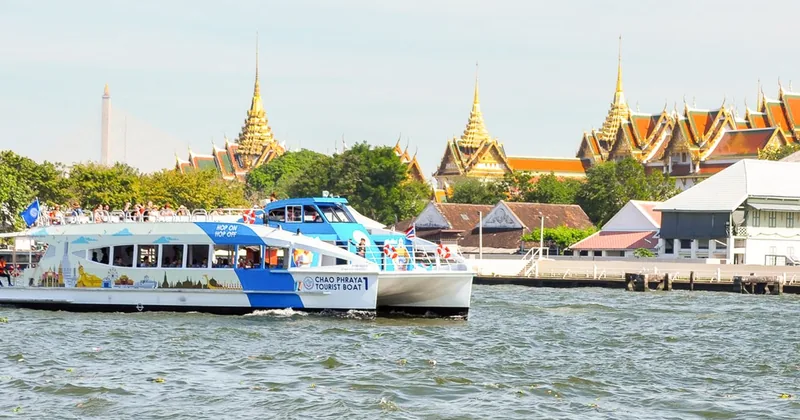
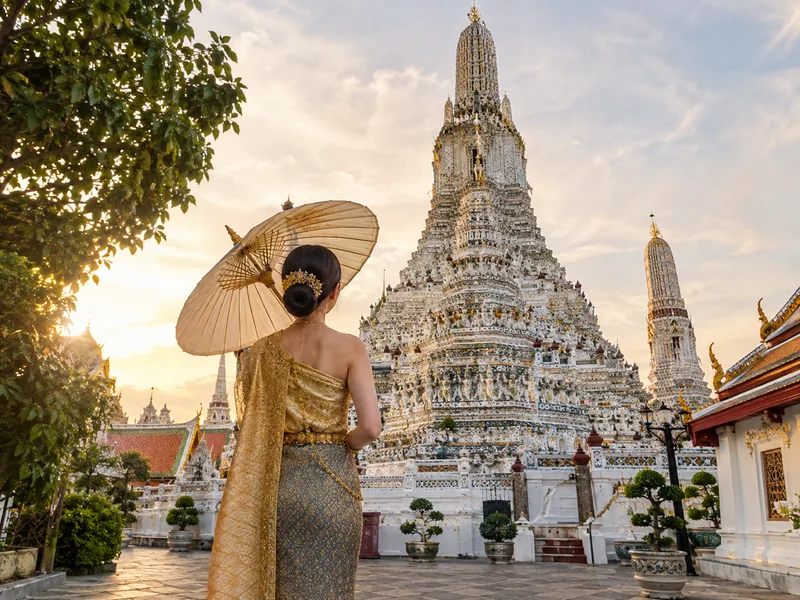
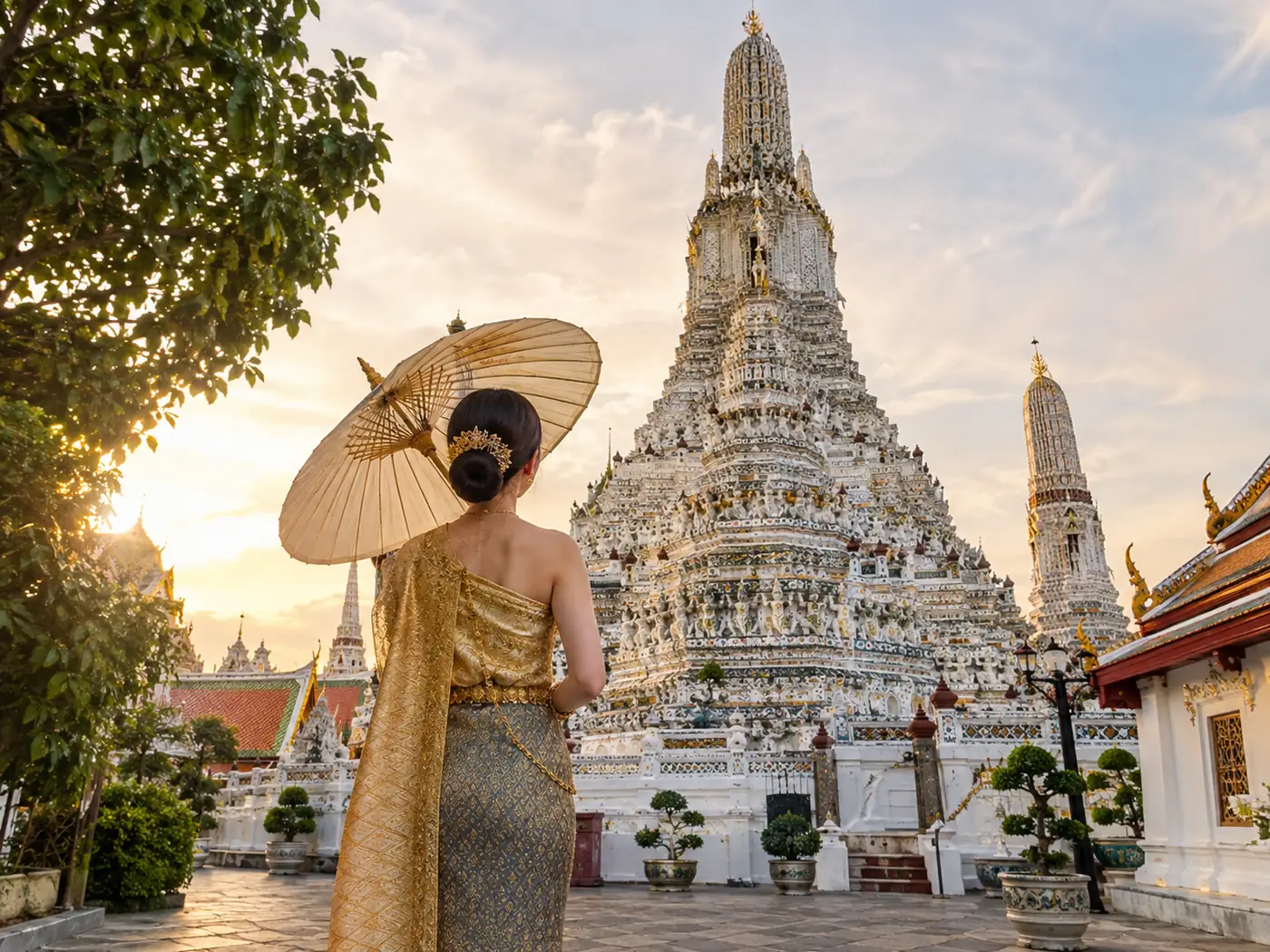
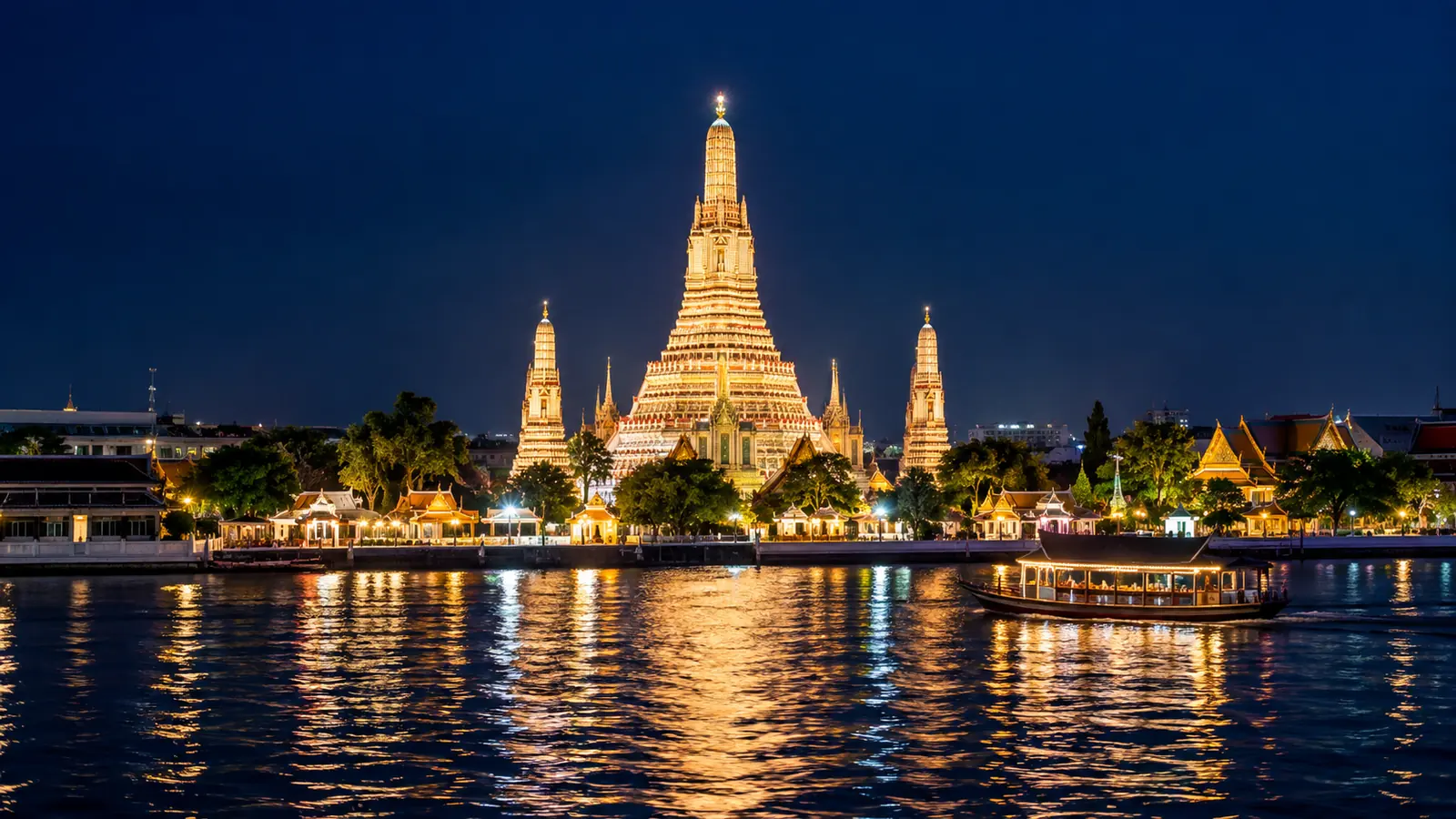
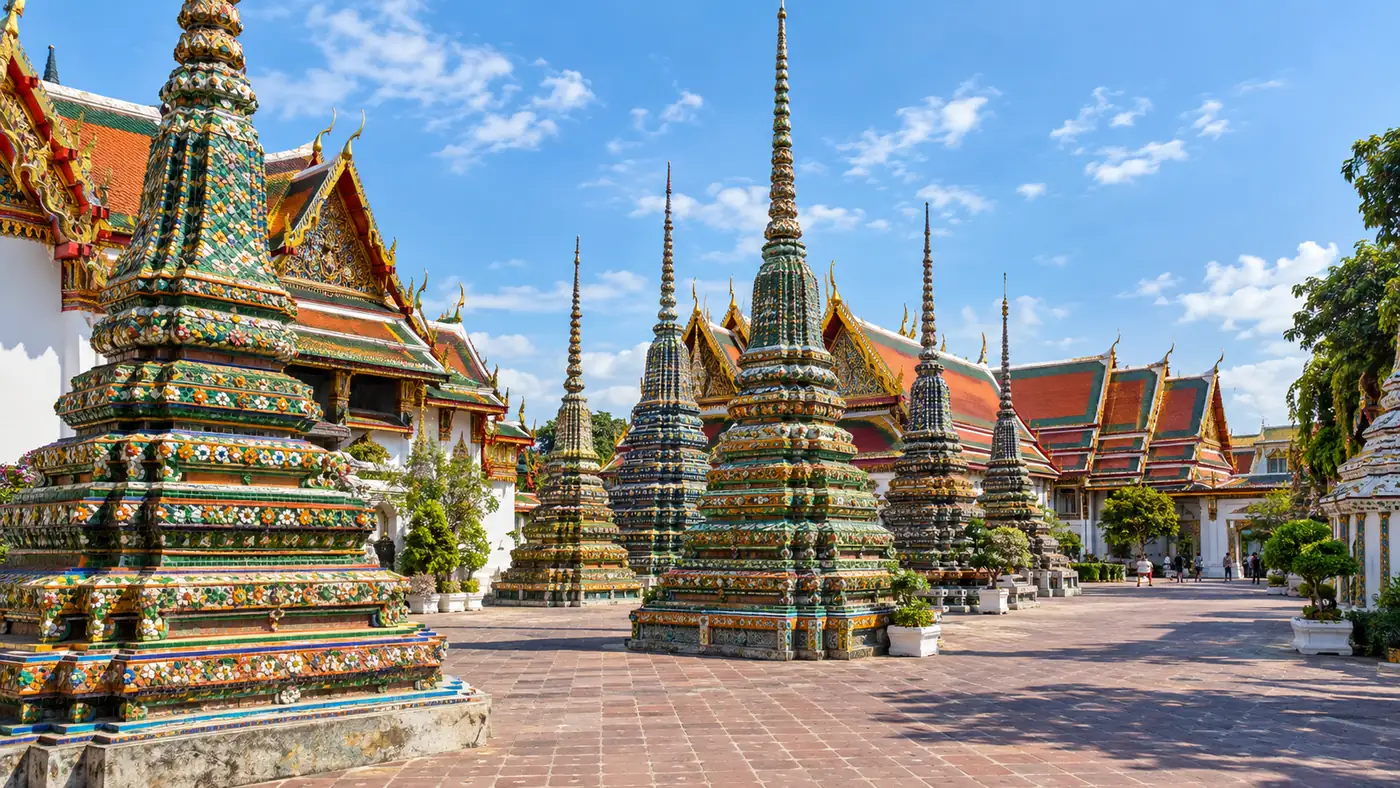
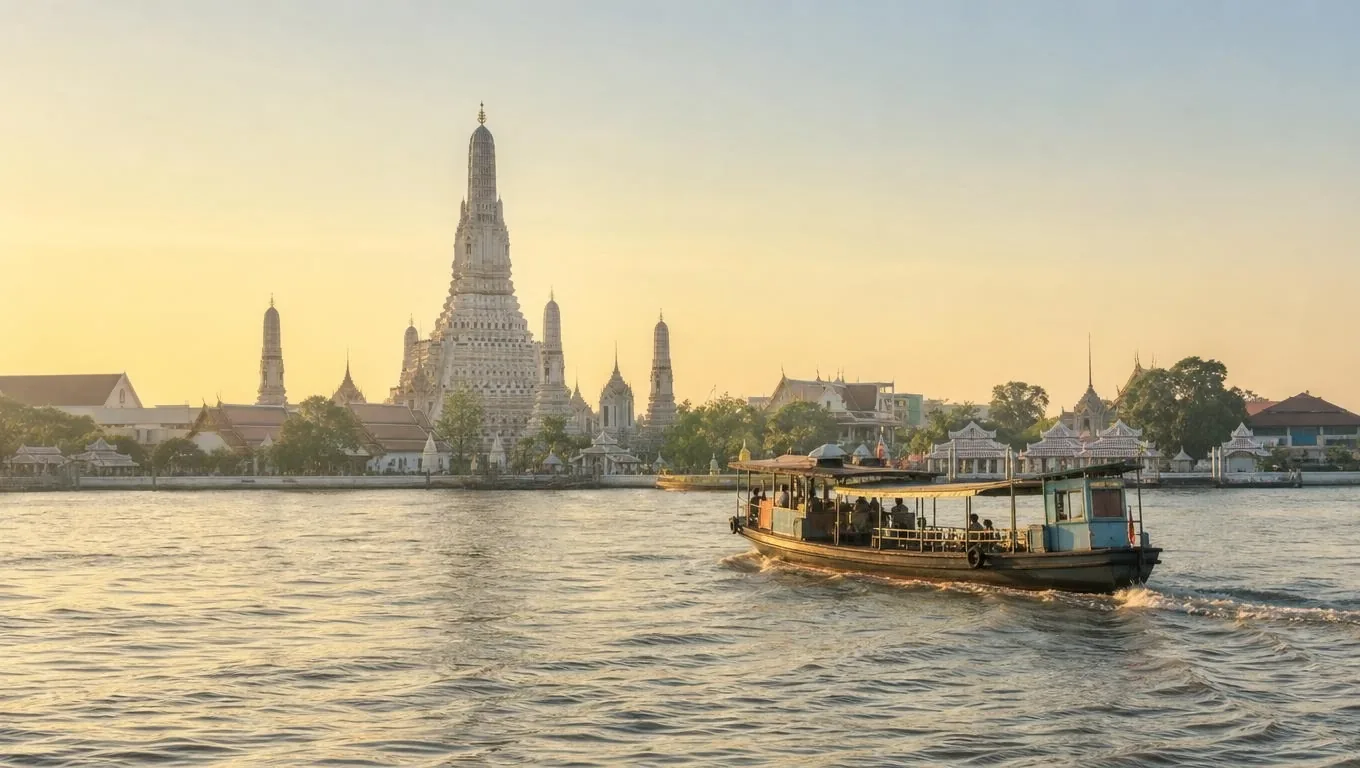
The porcelain prang · the river · Wat Pho · the Grand Palace
Visiting Wat Arun
How a visit really works, what to wear, how far you can climb, when the light is best,
and which tours add something you would miss on your own, compared honestly before you book.
Facts checkedHours, rules and history from official Thai sources
Real guest ratingsLive GetYourGuide figures, shown as they are
Refund terms per tourEvery tour here refunds in full up to 24 hours ahead
Secure checkoutBook on GetYourGuide, instant mobile tickets
Tours
Choose your Wat Arun tour
In the centre, the classic half day: the Grand Palace, Wat Pho and a boat across to Wat Arun.
On the left, the two temples on foot in three hours. On the right, the same river at sunset, with a tuk tuk to Chinatown.
Wat Pho's Reclining Buddha and the porcelain prang of Wat Arun in three hours on foot, with a guide, the ferry crossing and a fresh coconut between the two.
What's included
Wat Pho and the Reclining Buddha with a guide
The ferry across the Chao Phraya to Wat Arun
Wat Arun's central prang and courtyard explained
A fresh coconut between the two temples
Several start times a day; entry fees paid at the gates
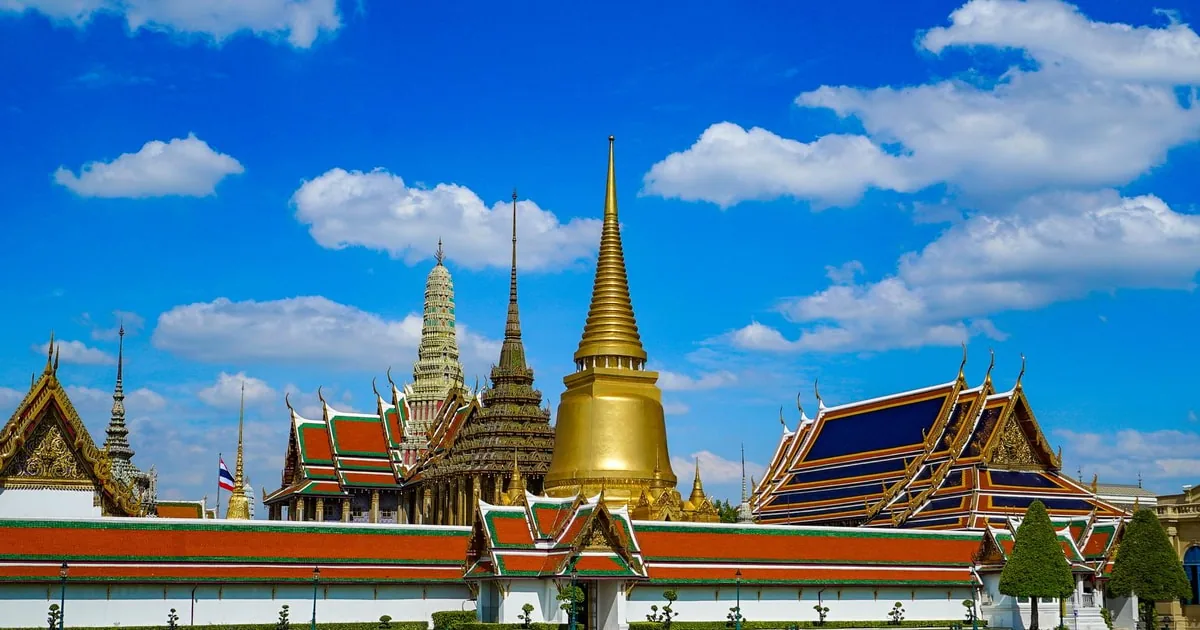
The Grand Palace, the Reclining Buddha at Wat Pho and a boat across the river to Wat Arun, with a guide who handles the ticket queues. The classic half day.
What's included
The Grand Palace and the Temple of the Emerald Buddha
Wat Pho and its Reclining Buddha
The boat across the river to Wat Arun
An English-speaking guide who helps you past the ticket queues
Bottled water; entry fees are paid at each gate on the day
The first row is the honest baseline: Wat Arun on its own is easy, with a small fee at the gate and a
ferry of a few minutes from Tha Tien pier. A tour adds a guide who explains what you are seeing, help at the Grand
Palace ticket queue, the order of a three-temple day, the canals by longtail or a hotel pickup.
Option
Starts
Best for
Length
Rating
Cancel
On your own, no tour
Tha Tien pier, then the ferry
Wat Arun alone: a small entry fee at the gate, cash, nothing to book
Most tours leave the temple entry fees to be paid at each gate on the day: check the
"What's included" box. The Grand Palace stops selling tickets at 3:30 pm, so three-temple tours start in the morning.
What the tour pages don't tell you
Easy on your own, richer with stories.
You do not need a tour to see Wat Arun. There is nothing to book ahead: you pay a small entry fee in
cash at the counter by the gate, and the ferry from Tha Tien pier, next to Wat Pho, crosses the river in a few
minutes. An hour is enough for the temple. Most "Wat Arun tours" are really three-temple days with the Grand
Palace and Wat Pho, walks through the old town, longtail trips through the canals, or boats that only pass it.
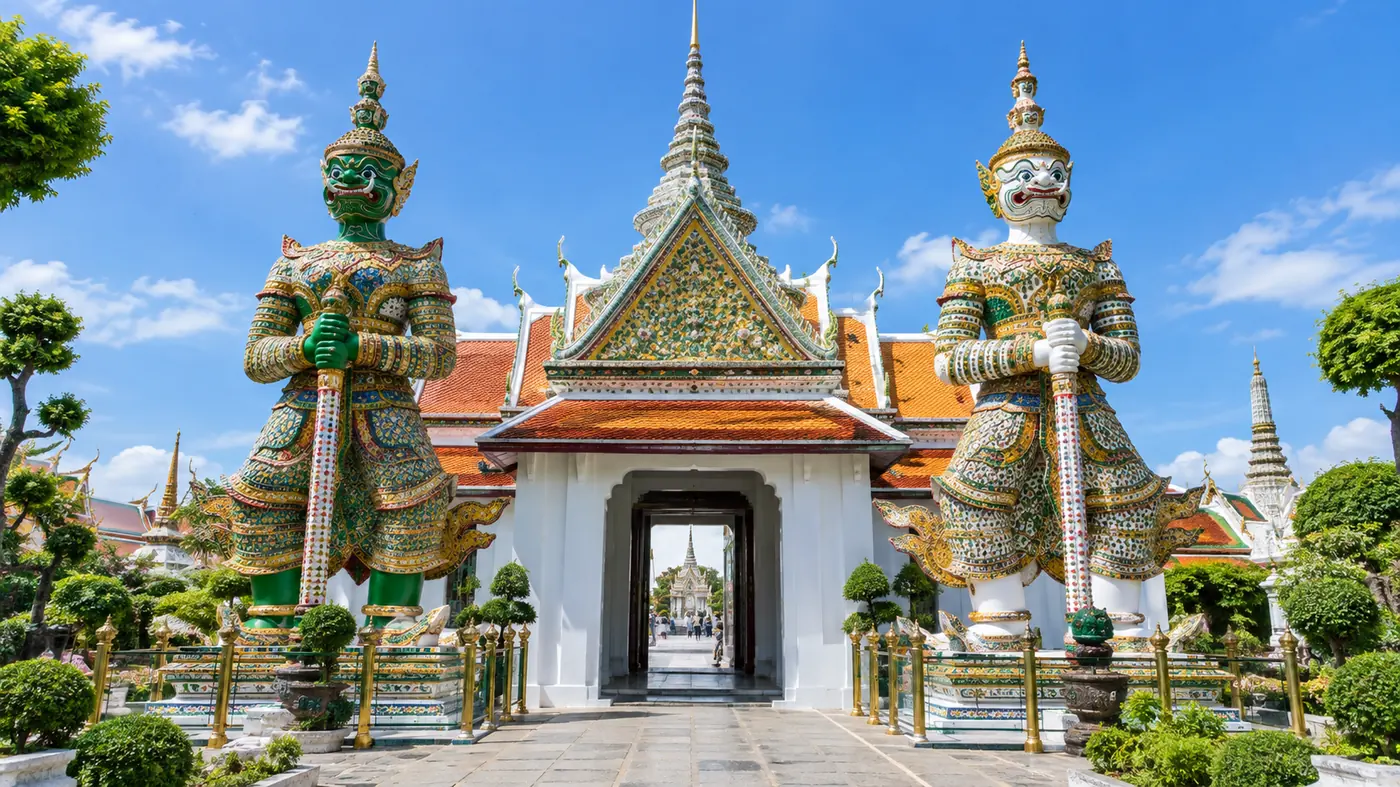
What a guide really adds is meaning: who the two giants at the gate are, why the prang is covered in broken
porcelain, which king designed the Buddha image in the ordination hall. On a combined day, a guide also saves
you time at the Grand Palace queue and keeps the order right. One thing no tour changes: you can only climb to
the lower terrace of the prang, and the steps are very steep.
80 m+
is how official Thai sources describe the central prang, covered
in pieces of Chinese porcelain and seashells that arrived in Bangkok as ships' ballast. Sources differ on the exact height.
Tickets at the gateShoulders and knees coveredLower terrace only8 am to 6 pmFerry from Tha Tien
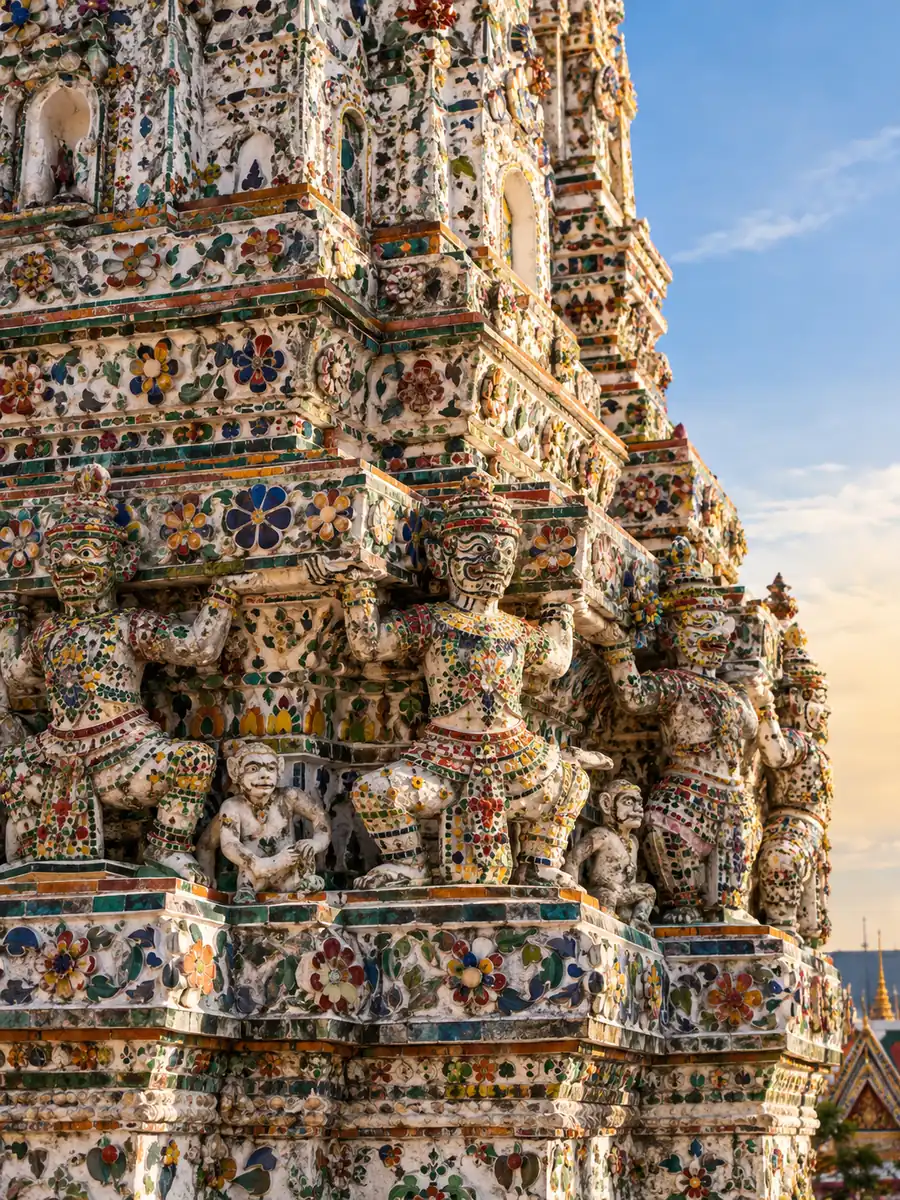
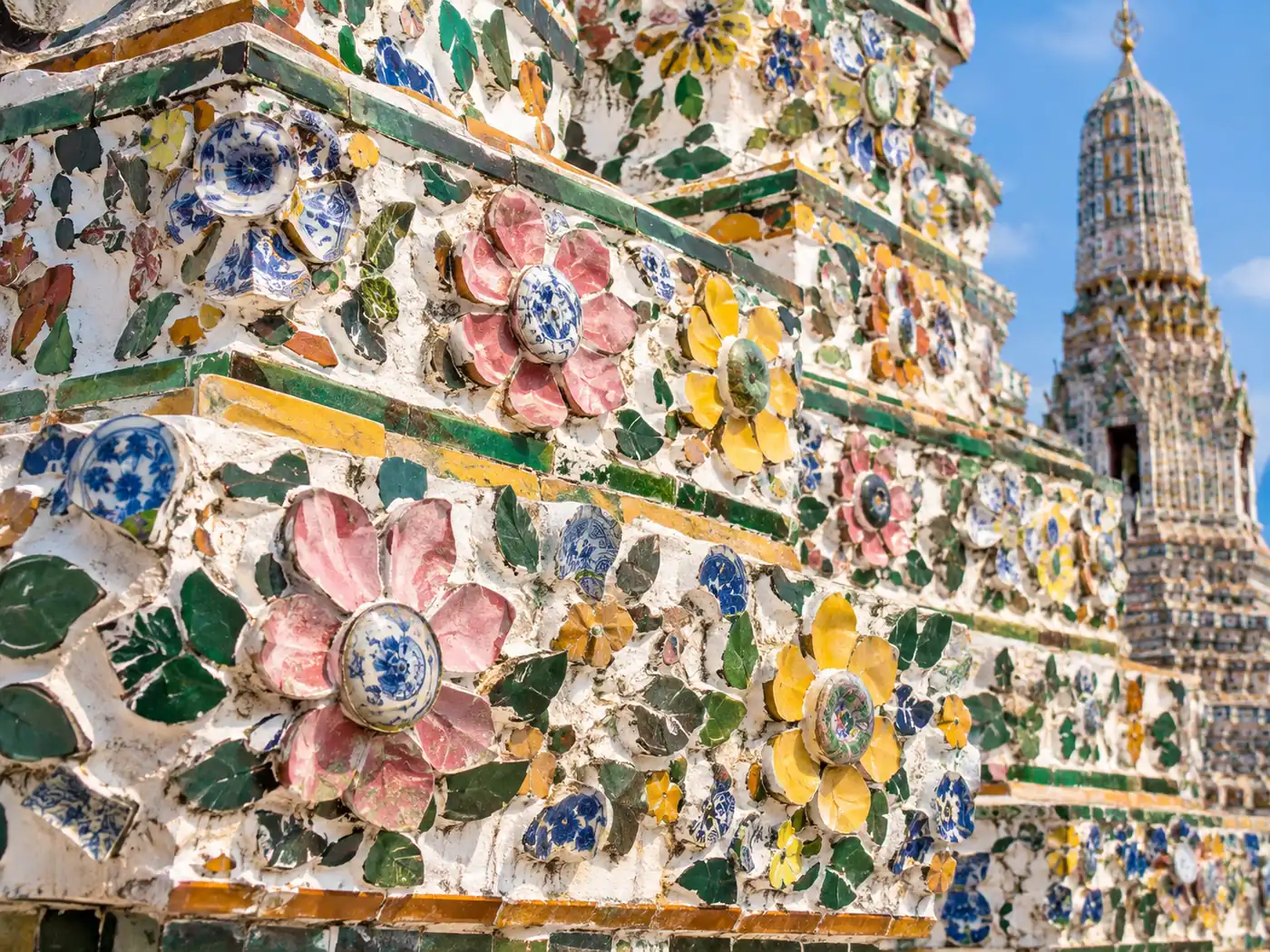
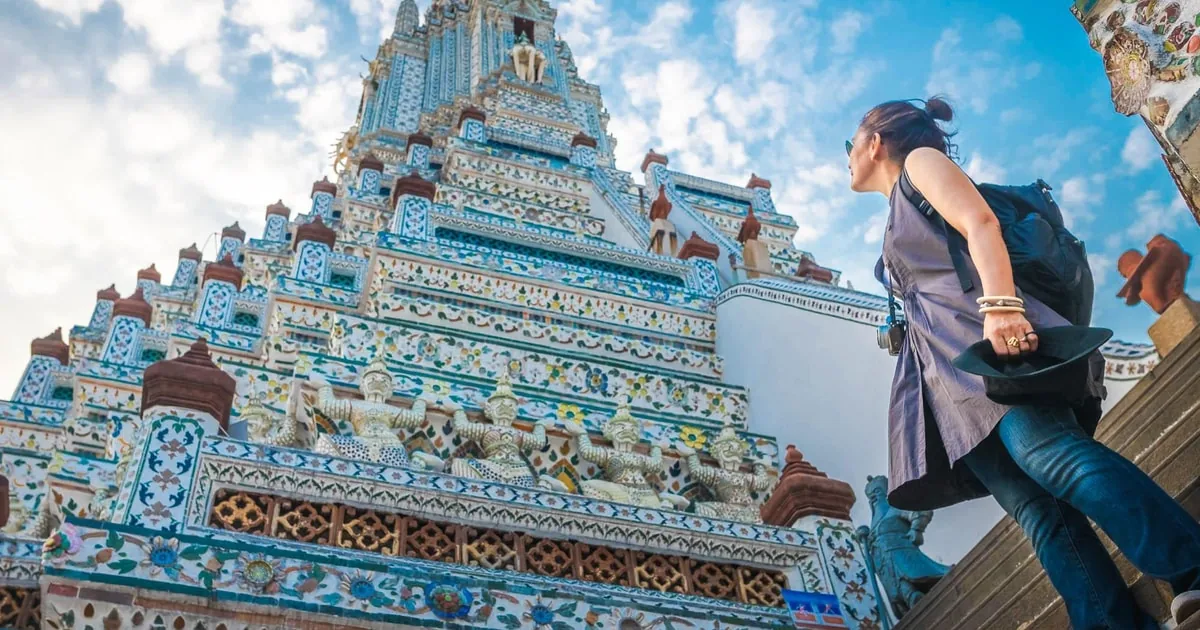
Up close, every tier is a garden of broken porcelain.
01
Tour or not?
On your own is easy; a guide adds the stories and handles a three-temple day.
02
How long?
About an hour at Wat Arun, half a day with Wat Pho and the Grand Palace.
03
When?
8 am for calm and cool air; November to February for the season.
04
What to wear?
Shoulders and knees covered, and shoes with a good grip for the steps.
How a visit works
From the ferry to the terrace
Every visit follows the same order, whether you come alone or with a guide. Allow about an hour,
and come back to the other bank for the sunset if you can.
01
Cross the river
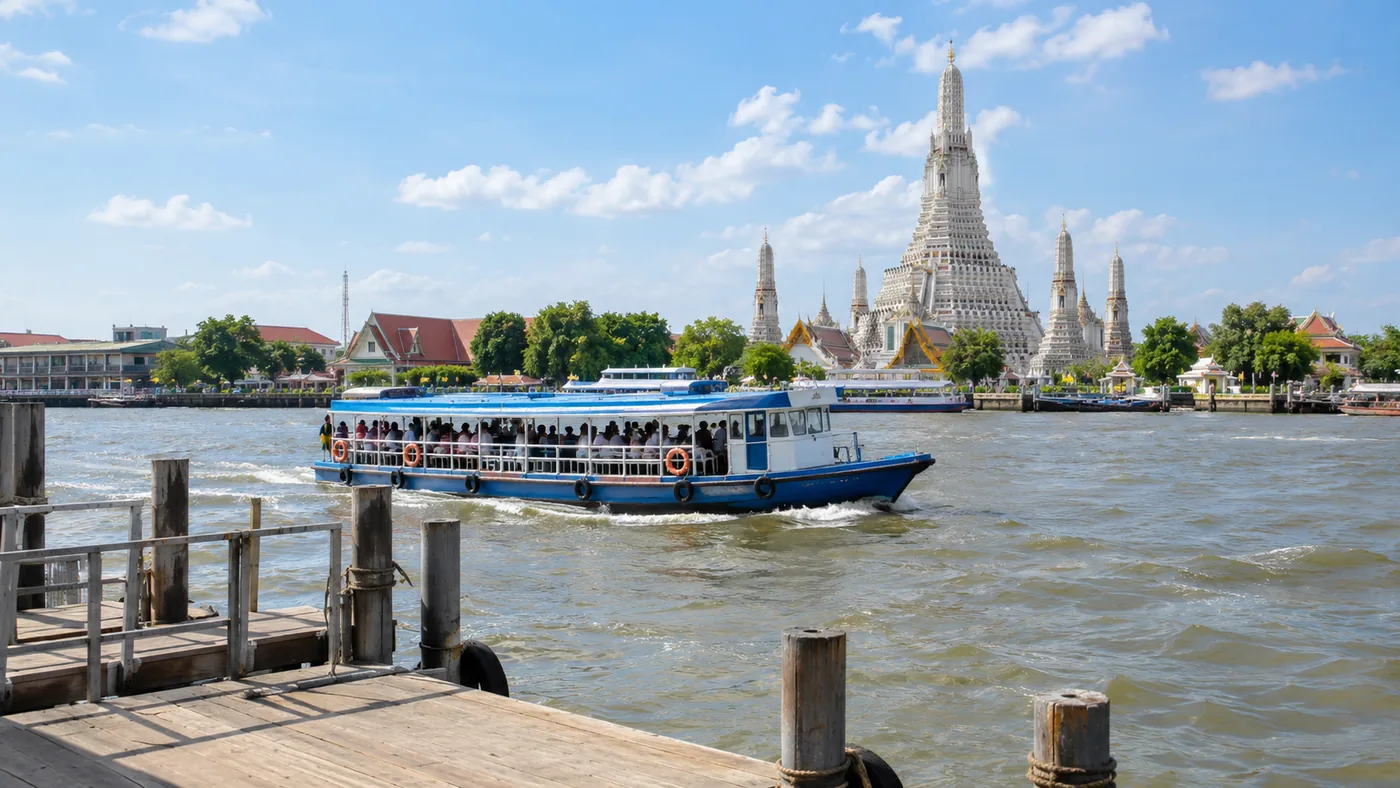
From Tha Tien pier, next to Wat Pho, the cross-river ferry lands you at the temple in a few minutes. Pay the few-baht fare in coins at the pier.
A few minutes
02
Ticket and dress
Buy your ticket at the counter by the gate, in cash; it usually comes with a small bottle of water. If your shoulders or knees are bare, rent a wrap at the entrance.
At the gate
03
The prang
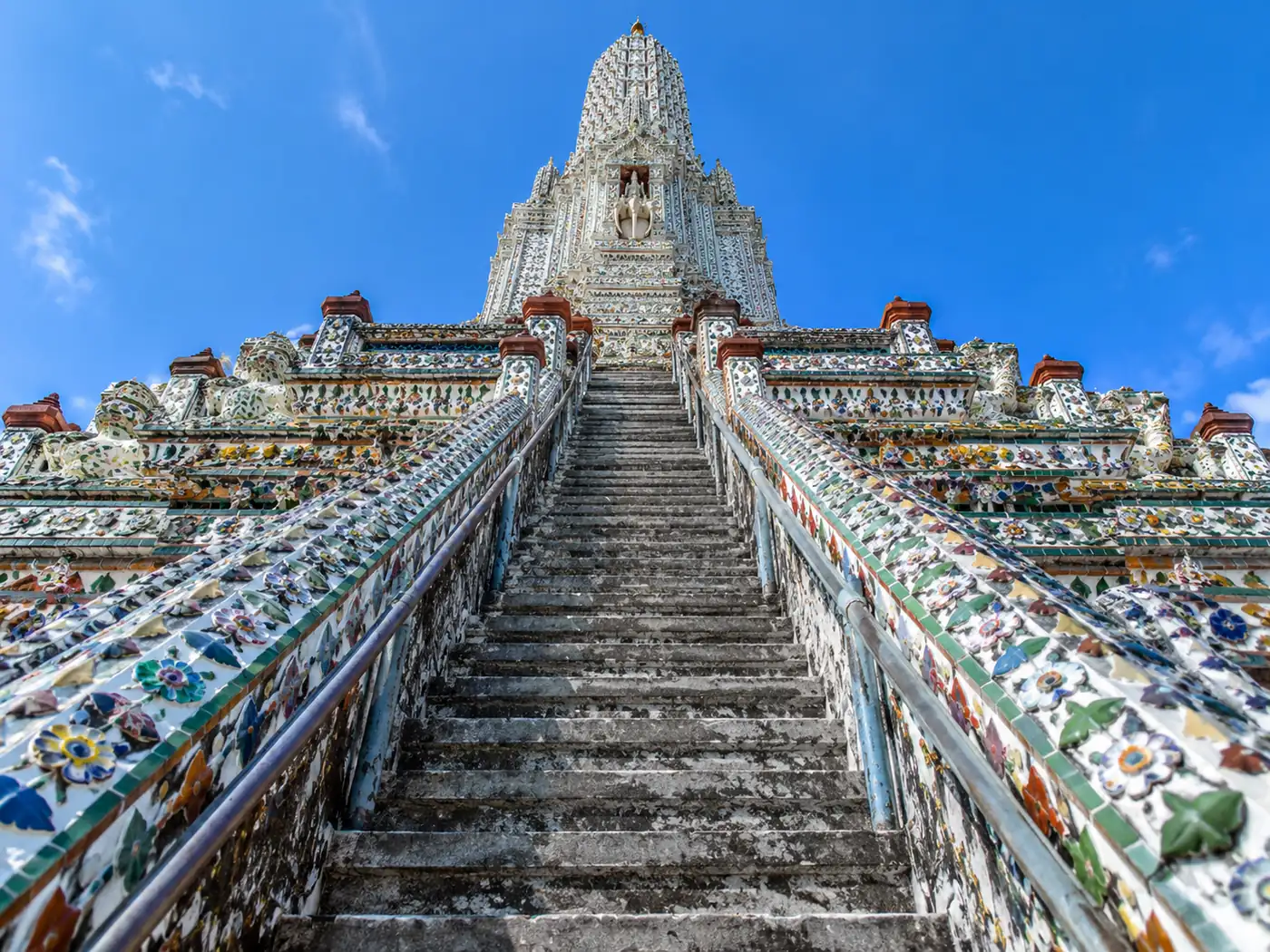
Walk around the central prang and its four smaller towers, then climb the steep steps to the lower terrace for the view across the river to the Grand Palace.
About 30 minutes
04
The ordination hall
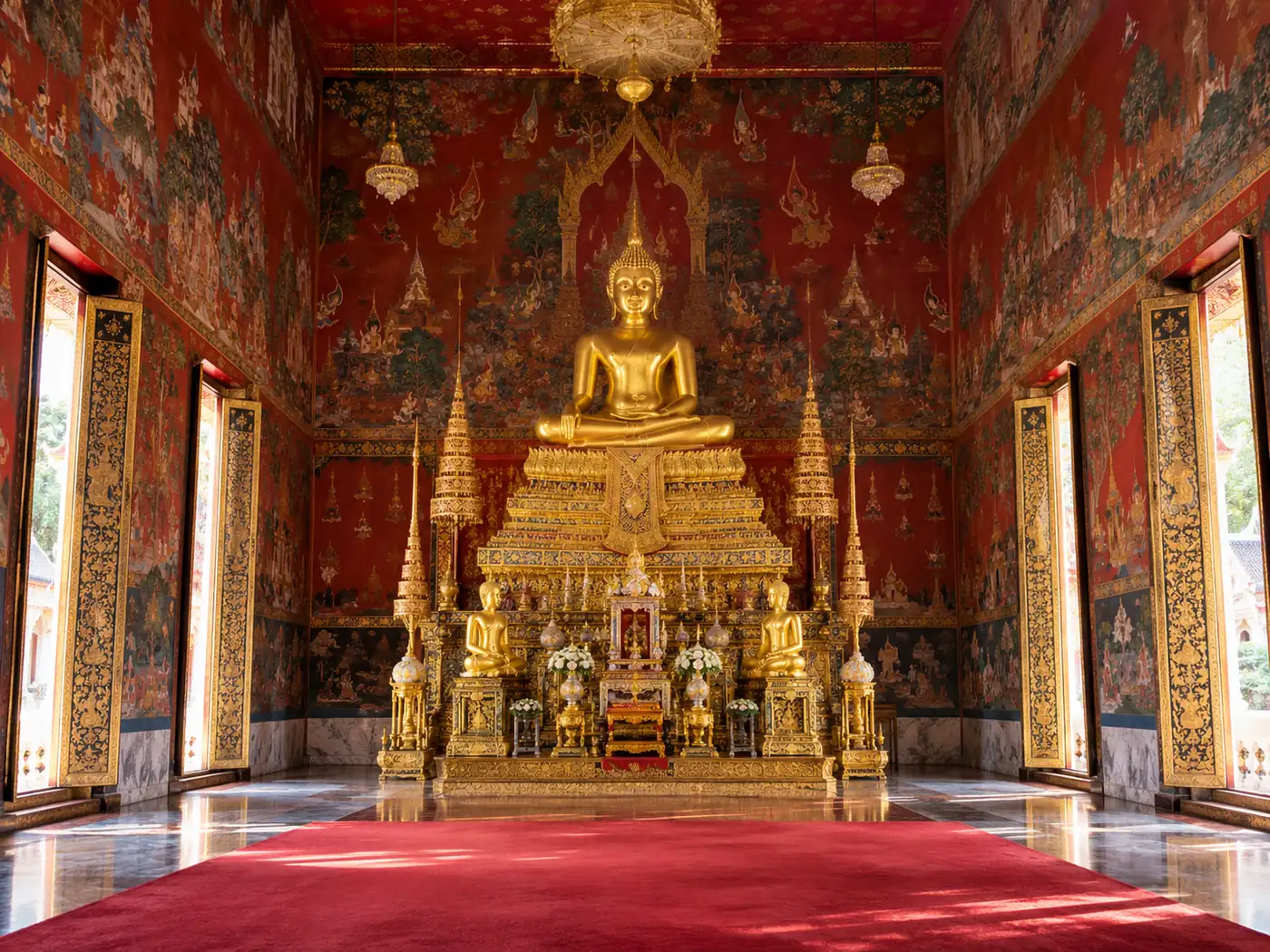
Pass between the two giant guardians to the ordination hall, take your shoes off, and see the Buddha image said to have been designed by King Rama II.
What the ticket covers, what to wear, when to come and how to cross the river.
Hours: every day from 8 am to 6 pm; the ticket counter stops selling at about 5:30 pm.
Tickets: foreign visitors pay a small entry fee at the counter by the gate; Thai citizens don't pay.
Cash: bring cash for the ticket, the ferry and a wrap if you need one.
Nothing to book: there is no online ticket and no need for one; tours that include entry say so in their list.
One ticket covers it all: the prang and its lower terrace, the four smaller towers, the ordination hall and the cloister.
Shoulders and knees: covered, for men and women alike; no sleeveless tops and no short shorts or skirts.
Nothing see-through: and no tight sportswear; loose, light clothes are the most comfortable anyway.
Wraps at the gate: sarongs and cover-ups can be rented for a small fee at the entrance.
Shoes off: inside the ordination hall; sandals are easiest, but good grip matters on the steep steps.
Grand Palace the same day? Dress for it: it has the strictest dress code of the three temples.
By metro: MRT Sanam Chai on the Blue Line, Exit 1, then a short walk to Tha Tien pier.
By ferry: the cross-river ferry from Tha Tien pier (N8) runs all day and takes a few minutes.
By river boat: the orange-flag express boat stops at Tha Tien; the blue-flag tourist boat stops right at Wat Arun pier.
From the BTS: Saphan Taksin station, then a boat upriver from Sathorn pier.
With a tour: walking tours meet in the old town, private tours pick you up at your hotel.
Cash in small notes and coins: for the ticket, the ferry and a cold drink.
Water and a hat: the courtyard is white stone with little shade at midday.
Shoes with grip: the steps up the prang are very steep and narrow.
A light scarf or shirt: to cover your shoulders if you are wearing a vest top.
A small bag only: you want both hands on the rail for the climb.
8 to 6Open dailyLast tickets at about 5:30 pm.
5PrangsThe central tower and four smaller ones.
1779Emerald BuddhaKept here until 1784, then moved across the river.
1851Prang completedBegun under Rama II, finished under Rama III.
2017RestoredFour years of work on the porcelain and plaster.
5 minFerry rideFrom Tha Tien pier, next to Wat Pho.
Where it starts
Tha Tien pier, then across
Wat Arun, Bangkok
158 Wang Doem Road, Bangkok Yai, on the west bank of the Chao Phraya
Wat Arun stands on the Thonburi side of the river, facing Wat Pho and the Grand Palace on the other bank.
Most visitors arrive by the cross-river ferry from Tha Tien pier, a short walk from MRT Sanam Chai and right
next to Wat Pho. The ticket counter is by the main gate, a minute from the landing. The blue-flag tourist boat
stops at Wat Arun's own pier, and a taxi can drop you on the Thonburi side, though the river is quicker.
Walking tours meet in the old town; private tours pick you up at your hotel.
4.8★★★★★ 5,771 reviews · Grand Palace, Wat Pho and Wat Arun tour GetYourGuide figure
★★★★★
We loved Paul's enthusiasm and knowledge. It was a fantastic way to see the city and a brilliant tour for a total Bangkok newbie and for somebody who last visited over thirty years ago.
★★★★★
Our guide Jeerawat was fantastic. The tour was a great balance of telling us about what we were seeing, explaining the history and significance of the temples, and giving us plenty of time to roam and take pictures.
★★★★★
This was a perfect evening tour. The timing was just right, with Wat Pho just before closing and then Wat Arun as the sun went down and the lights came on.
★★★★★
A great historical overview of Thailand's more modern history after the kingdom moved to Bangkok. Our guide Eve was amazing and so knowledgeable. A great tour to do before going to Ayutthaya, because it puts the history into context.
★★★★★
We could have gone to the temple alone, but we would have missed out on a lot of the history and background that the guide was able to give us. We would never have toured the canals on our own.
★★★★★
It's not my first time visiting these places, but the night tour takes it to a whole different level: there is no crowd and it's not as warm as the daytime tours.
★★★★★
Privately driven about in a very comfortable air-conditioned car, with water and cool towels waiting between stops. Very knowledgeable and passionate about their country.
★★★★★
Jack explained a lot about the different parts of a Buddhist temple and answered all our questions. I liked that we visited Wat Arun first, so everybody could stay at Wat Pho as long as they wanted.
★★★★★
An incredible way to see the sights of Bangkok. The river offers a much more relaxed way to travel, especially on a hot day. Really well organised, and easy to hop on and off throughout the day.
After the temple
Wat Arun from the river
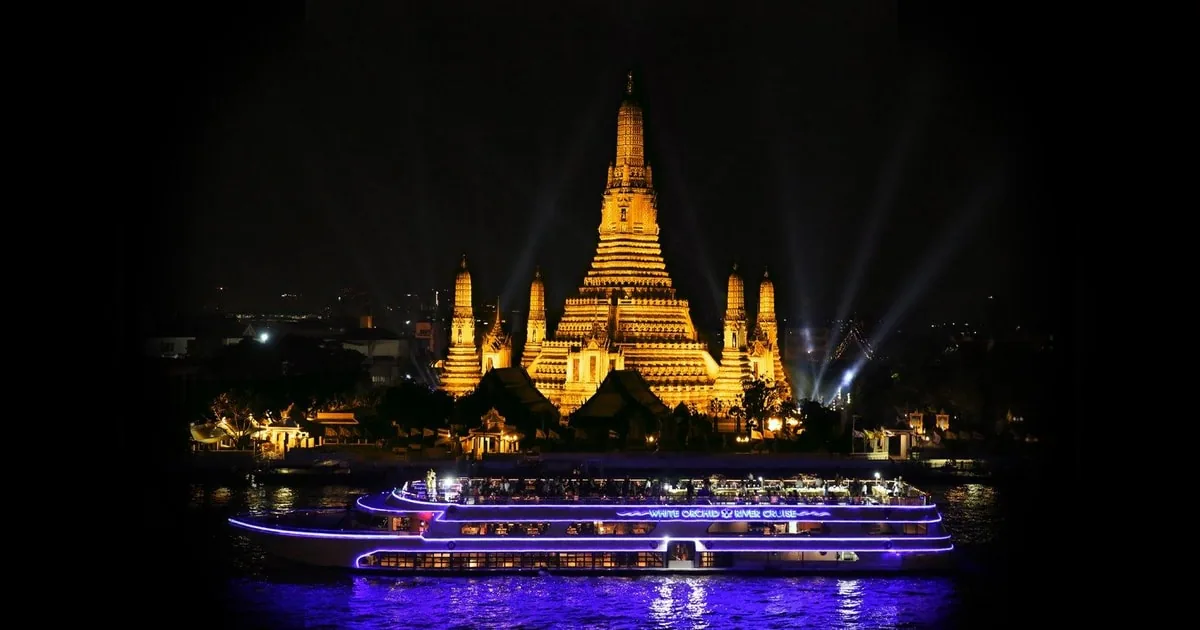
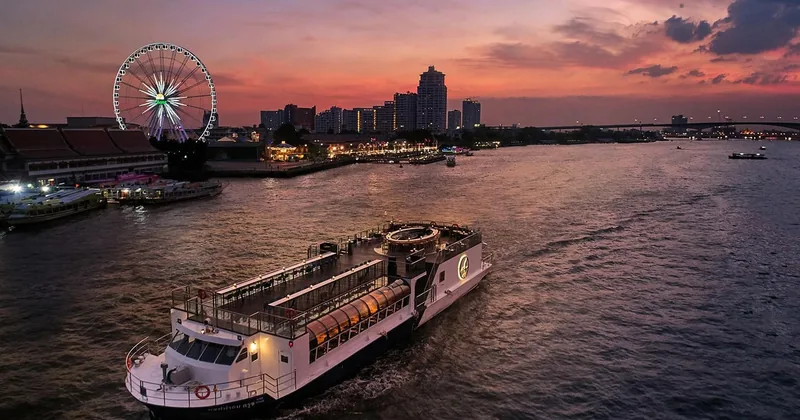
The temple closes at 6 pm, but the best is still to come: after dark the prang is lit, and the
river is the place to see it. For a slow evening with a proper meal, a dinner cruise passes it on the water.
Saffron Fine Dining River Cruise
★ 4.6 · 42 reviews · GetYourGuide
See Wat Arun lit up from the water: an evening on the Chao Phraya aboard Banyan Tree's Saffron, with a welcome cocktail on the upper deck, a four-course Thai menu and live music as the boat passes the Temple of Dawn and the Grand Palace. Full refund if you cancel up to 24 hours ahead.
Wat Arun Ratchawararam, the Temple of Dawn, stands on the west bank of the Chao Phraya River in
Bangkok, facing Wat Pho and the Grand Palace across the water. Its central prang, a tall tower covered in pieces of
coloured porcelain and seashells, is one of the most recognisable sights in Thailand, and it is open to visitors
every day from 8 am to 6 pm.
How it came to be
A temple stood here in the Ayutthaya period, known as Wat Makok. After the fall of Ayutthaya, King Taksin made
Thonburi, on this bank of the river, his capital around 1767, and the temple, renamed Wat Chaeng, became one of its
most important. The Emerald Buddha was kept here from 1779 until 1784, when it moved across the river to Wat Phra
Kaew in the new capital. King Rama II began enlarging the prang, and King Rama III completed it around 1851. The
name is usually linked to Aruna, the Indian god of dawn.
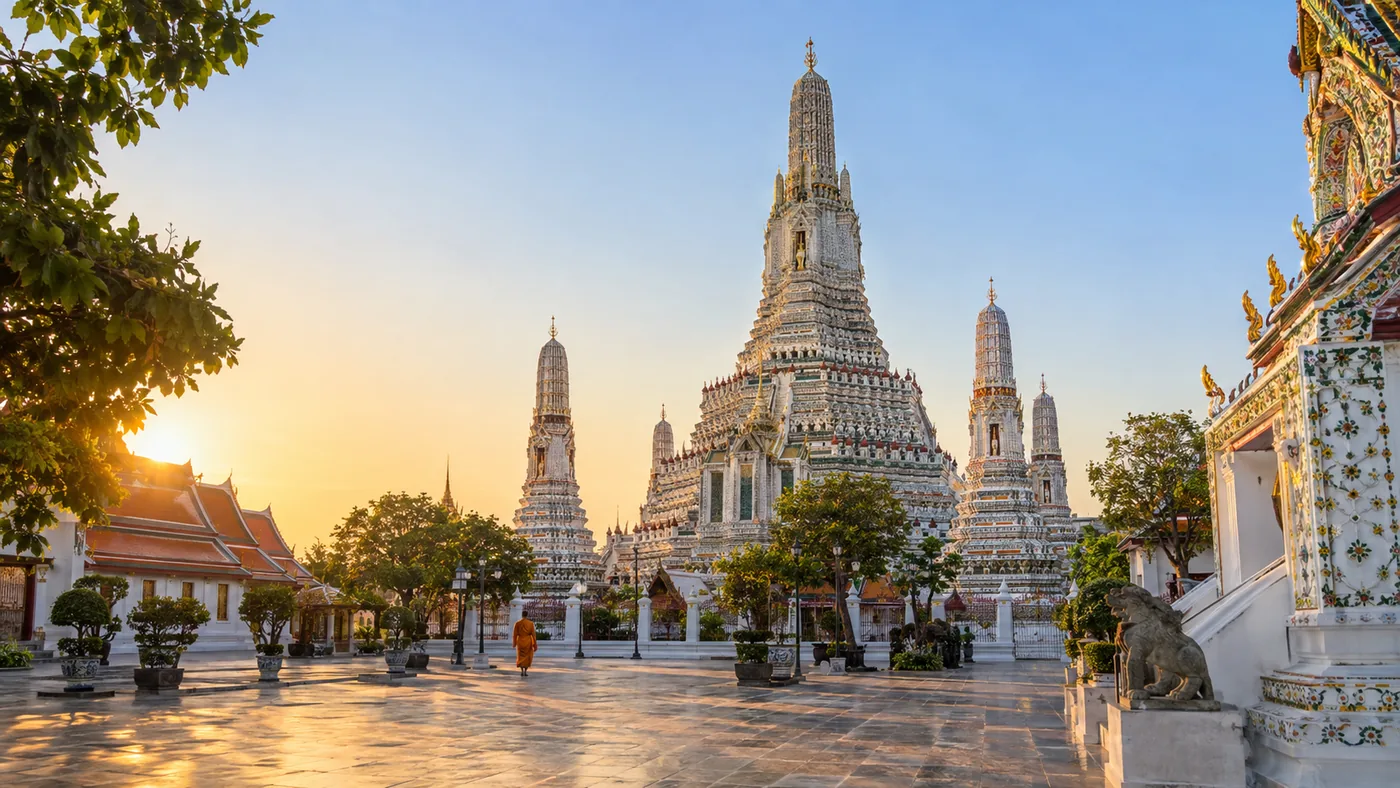
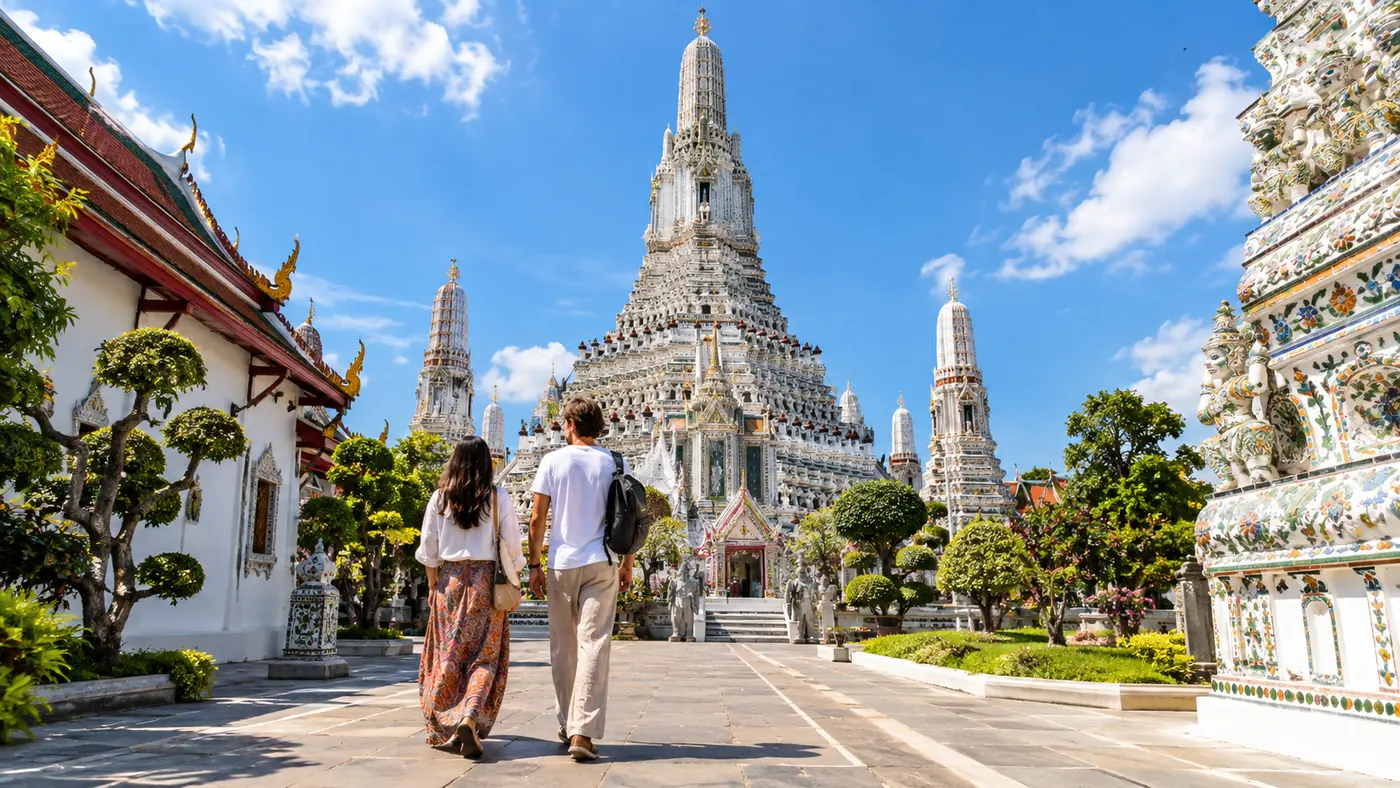
Just after opening, the calmest hour of the day.
A tower of porcelain
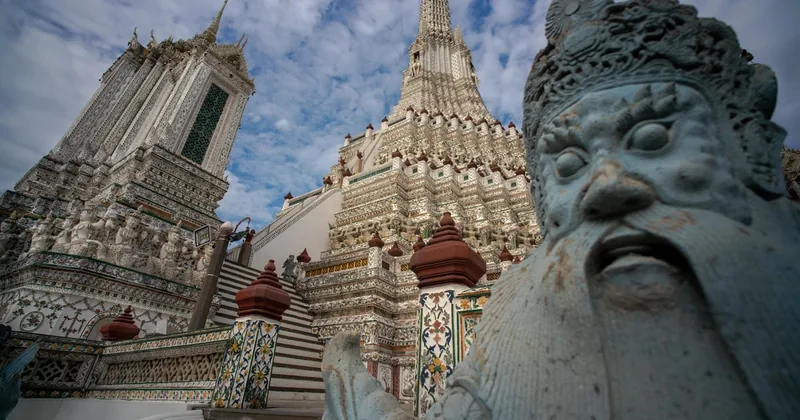
Look closely and the white prang is a mosaic: flowers, leaves and patterns made from pieces of Chinese porcelain
and seashells, much of it said to have arrived in Bangkok as ballast on trading ships. Rows of small demons and
monkeys seem to hold up each tier. Four smaller prangs stand at the corners. A major restoration from 2013 to 2017
replaced damaged pieces and renewed the plaster, and the prang is on Thailand's tentative list for UNESCO World
Heritage.
The honest small print: no tour lets you climb higher than anyone else: every visitor stops
at the lower terrace. Most tours also leave the entry fee to you at the gate. A guide is worth it for the stories,
for help at the Grand Palace on a three-temple day, and for the timing of an evening visit. If you only want Wat
Arun, read our guides, take the ferry and buy your ticket at the gate.
The ordination hall and its giants
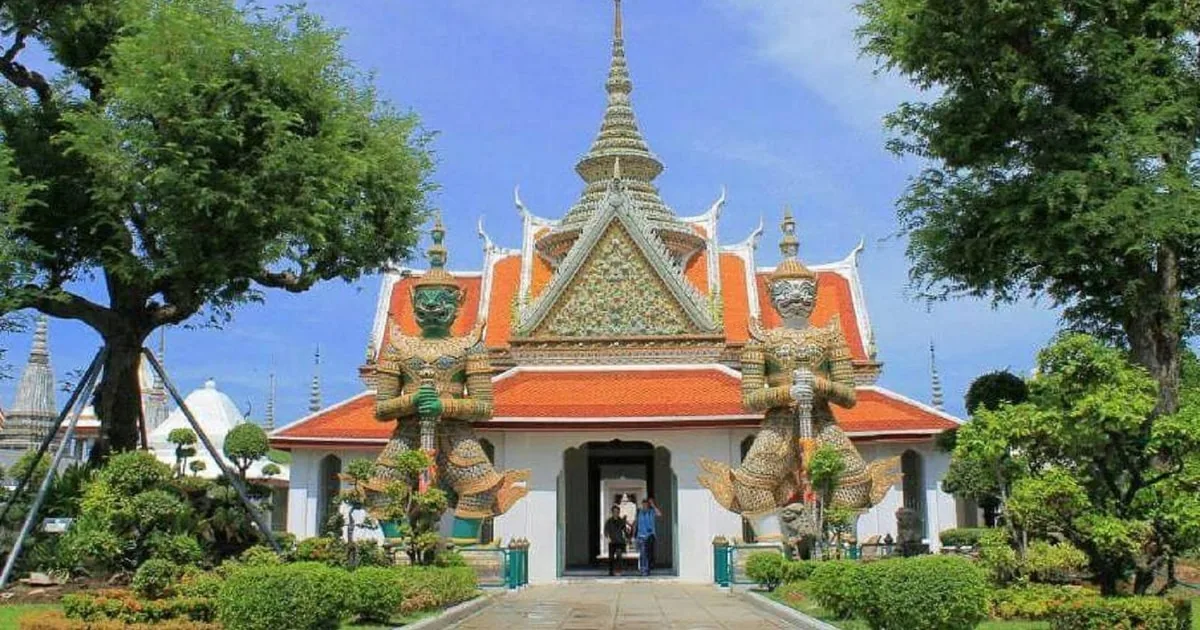
Two giant guardians, figures from the Ramakien, the Thai version of the Ramayana, stand at the gate of the
ordination hall: the green one is Thotsakan, the white one Sahatsadecha. Inside, the main Buddha image is said to
have been designed by King Rama II, whose ashes rest in its base. Take your shoes off, keep your voice low, and sit
with your feet pointing away from the Buddha image if you stay for a moment.
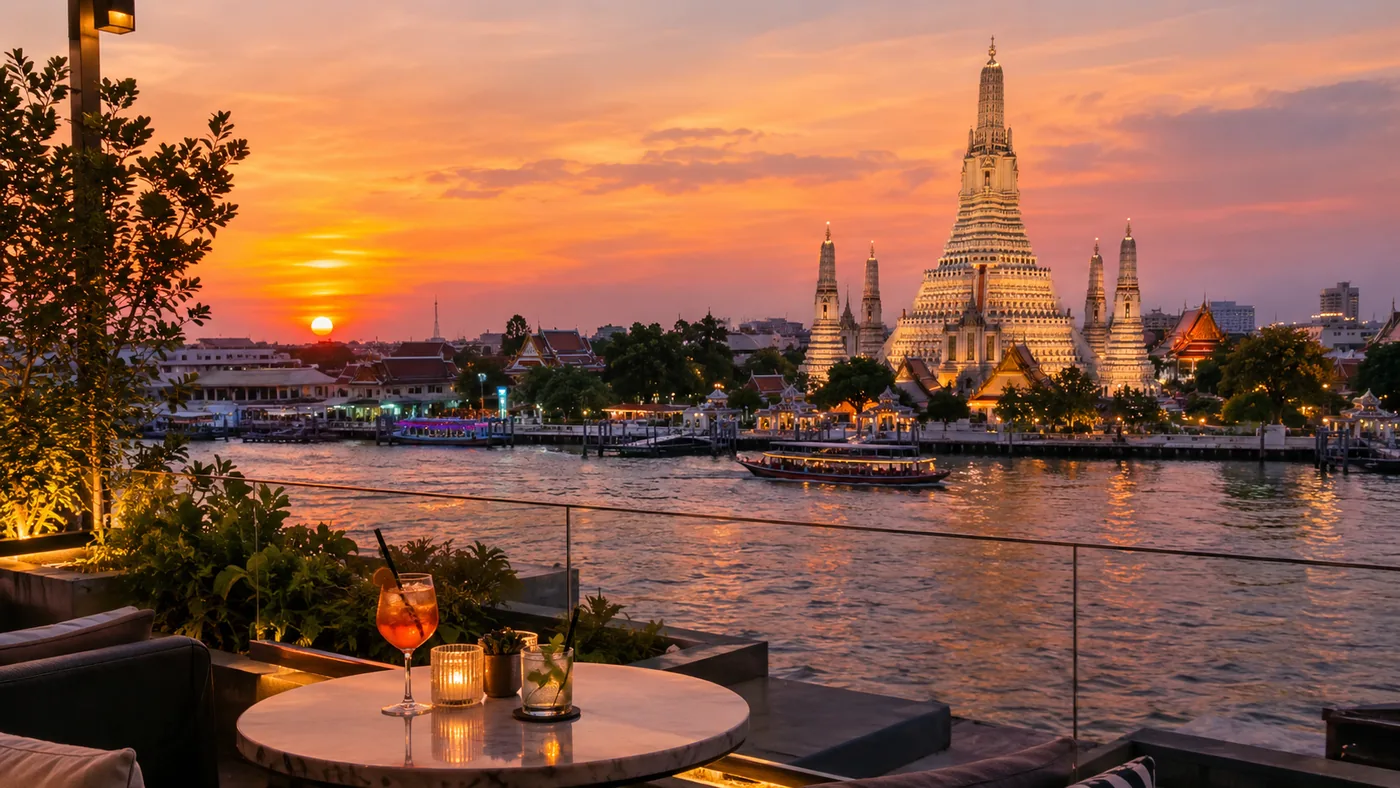
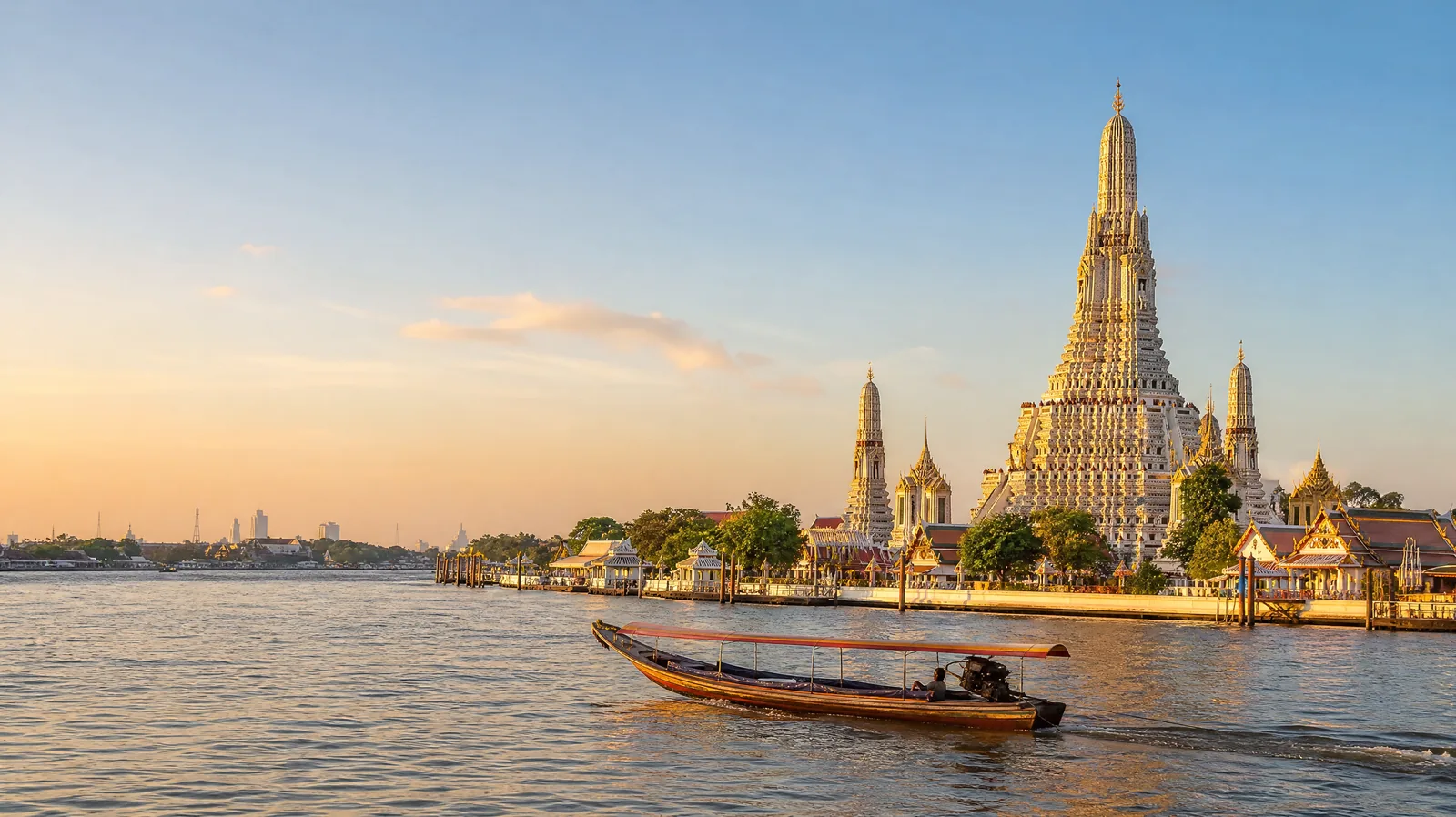
Sunset from the other bank, the view on the postcards.
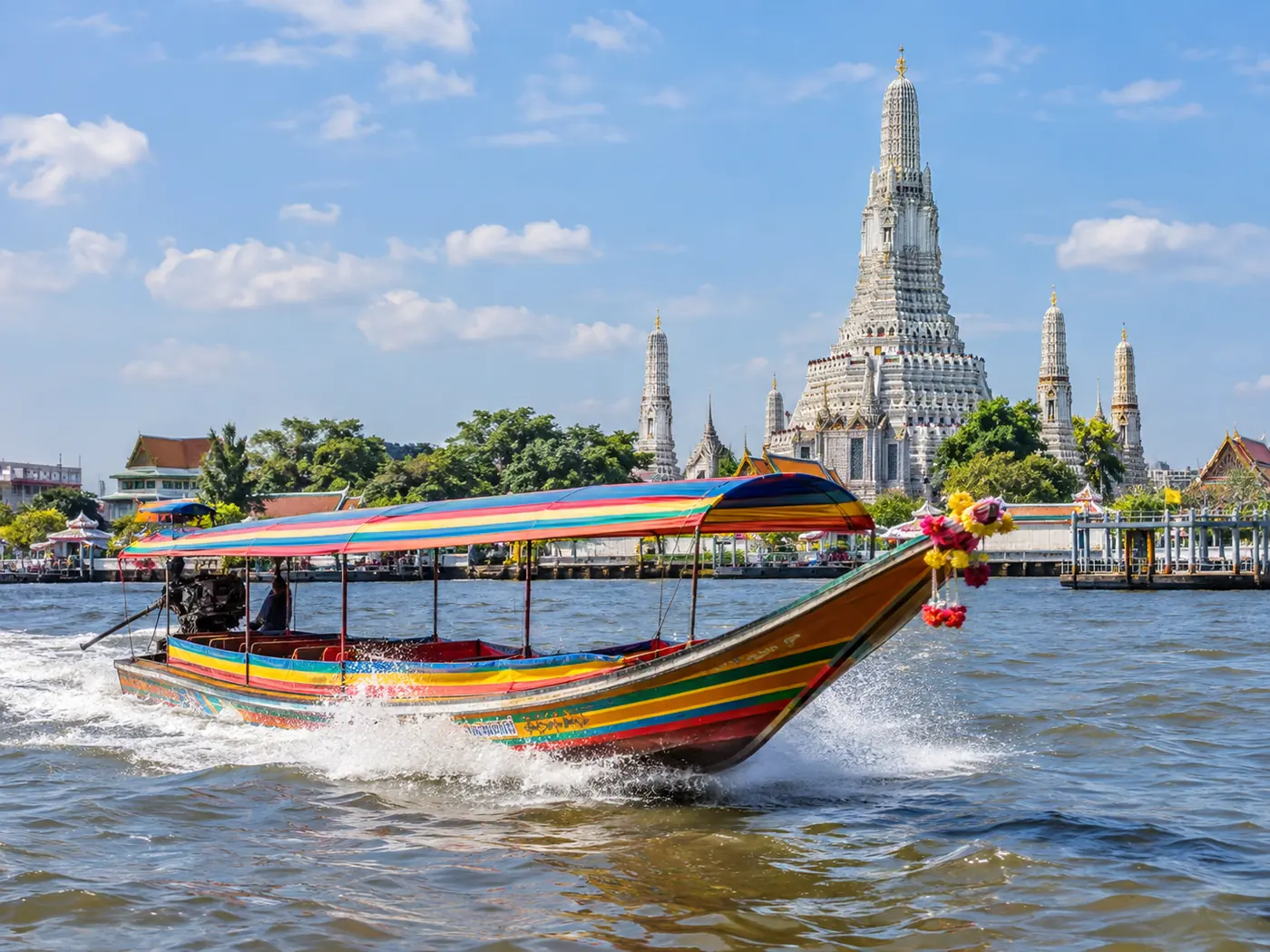
The river around it
Wat Arun is best understood from the water. The cross-river ferry from Tha Tien pier takes a few minutes, the
blue-flag tourist boat stops at the temple's own pier, and longtail boats head from here into the Thonburi
canals. At sunset the prang stands against the sky seen from the east bank, and after dark it is lit, a view best
enjoyed from a rooftop or a boat.
What to wear, in one line
Shoulders and knees covered, nothing see-through, shoes you can take off for the ordination hall and that grip
on the steep steps. There is no colour rule for visitors; plain, modest clothes are appreciated.
Straight answers to what visitors ask most about Wat Arun.
Do you need a ticket for Wat Arun?
Yes, foreign visitors pay a small entry fee in cash at the ticket counter by the gate, and it usually comes with a small bottle of water. There is nothing to book ahead. Thai citizens don't pay. What the ticket covers in tickets, hours and what is inside.
What time does Wat Arun open and close?
Every day from 8 am to 6 pm. The ticket counter stops selling at about 5:30 pm, so arrive by 5 pm if you want time on the terrace before closing.
Can you climb Wat Arun?
Partly. You can climb the very steep steps to the lower terrace of the central prang; the upper levels have been closed since the 2013 to 2017 restoration. Hold the rail and come down slowly, facing the steps if it helps.
What should I wear to Wat Arun?
Cover your shoulders and knees: no shorts above the knee, no sleeveless tops and nothing see-through. Wraps can be rented for a small fee at the entrance, and you take your shoes off in the ordination hall. Every detail in what to wear to Wat Arun.
How long do you need at Wat Arun?
Forty-five minutes to an hour and a half. An hour is enough for the prang, the lower terrace, the ordination hall and the giant guardians at its gate.
What is the best time to visit Wat Arun?
Right at 8 am for cool air and an empty courtyard, or late afternoon for softer light. For the famous sunset view, watch from the other bank, where the sun sets behind the prang. Month by month in the best time to visit.
How do you get to Wat Arun?
Take the MRT to Sanam Chai, walk a few minutes to Tha Tien pier next to Wat Pho, and take the cross-river ferry: a ride of a few minutes for a few-baht coin. The blue-flag tourist boat also stops right at Wat Arun pier. Every route in how to get to Wat Arun.
Should I visit Wat Pho or Wat Arun?
Both, if you can: they face each other across the river, a short walk and a ferry ride apart. Wat Pho has the Reclining Buddha, Wat Arun the porcelain prang and the river. How to combine them in Wat Pho or Wat Arun.
Is it worth going inside Wat Arun?
Yes. From the water you only see the outline; up close you see the flowers made of broken porcelain, the tiers of small figures, the view from the terrace and the giant guardians at the ordination hall.
Where is the best view of Wat Arun?
From the east bank at sunset: the rooftop bars along the river on the Tha Tien side, or simply the pier. After dark the prang is lit, best seen from the river. All the viewpoints in where to see Wat Arun.
Do you need a guide for Wat Arun?
No. The temple is easy to visit on your own. A guide adds the stories behind the giants and the porcelain, help with the Grand Palace queue on a combined day, and the timing of an evening visit.
Ready to go
Take the ferry, then climb.
Or go with a guide who knows the stories: instant mobile tickets on GetYourGuide, with the refund terms on every tour.

 Three hours
★ 4.63 hours1,803 reviews
Three hours
★ 4.63 hours1,803 reviews